Roller Replacement
Doors that stick, grind, or jump the track almost always come down to worn rollers. We replace them with heavy-duty stainless rollers so your door glides with one finger again.
About this service
We learned this trade in Palm Beach County — and Jupiter, where river, inlet, and ocean meet, is still one of our favorite places to work.
SliderPro started in Palm Beach County before growing north, so working Jupiter feels like coming home — and our 561 line (561-566-2855) still rings for exactly this reason. Jupiter's geography throws every door environment we know at us in one town: oceanfront condos along A1A and the beach, inlet and riverfront homes up the Loxahatchee, the planned neighborhoods of Abacoa with their thousands of 1990s–2000s builder sliders, and gated communities from Jonathan's Landing to the clubs off Donald Ross Road.
Each zone fails differently. Beach and inlet homes run the classic salt clock — bearings corroding to seizure in five to ten years without maintenance. Abacoa's builder-grade hardware is now two decades old across entire neighborhoods, and we often service several homes on the same street in a week; when one house's rollers flatten, the identical doors next door aren't far behind. The riverfront brings heavy panels and humidity; the golf communities bring lanai doors with enormous duty cycles.
Our Jupiter work covers all of it: stainless roller replacement matched to the door, screen fabric replacement including no-see-um mesh (a near-necessity close to the river and mangroves), deadbolt security locks, and full maintenance visits that service every slider in the house in one stop.
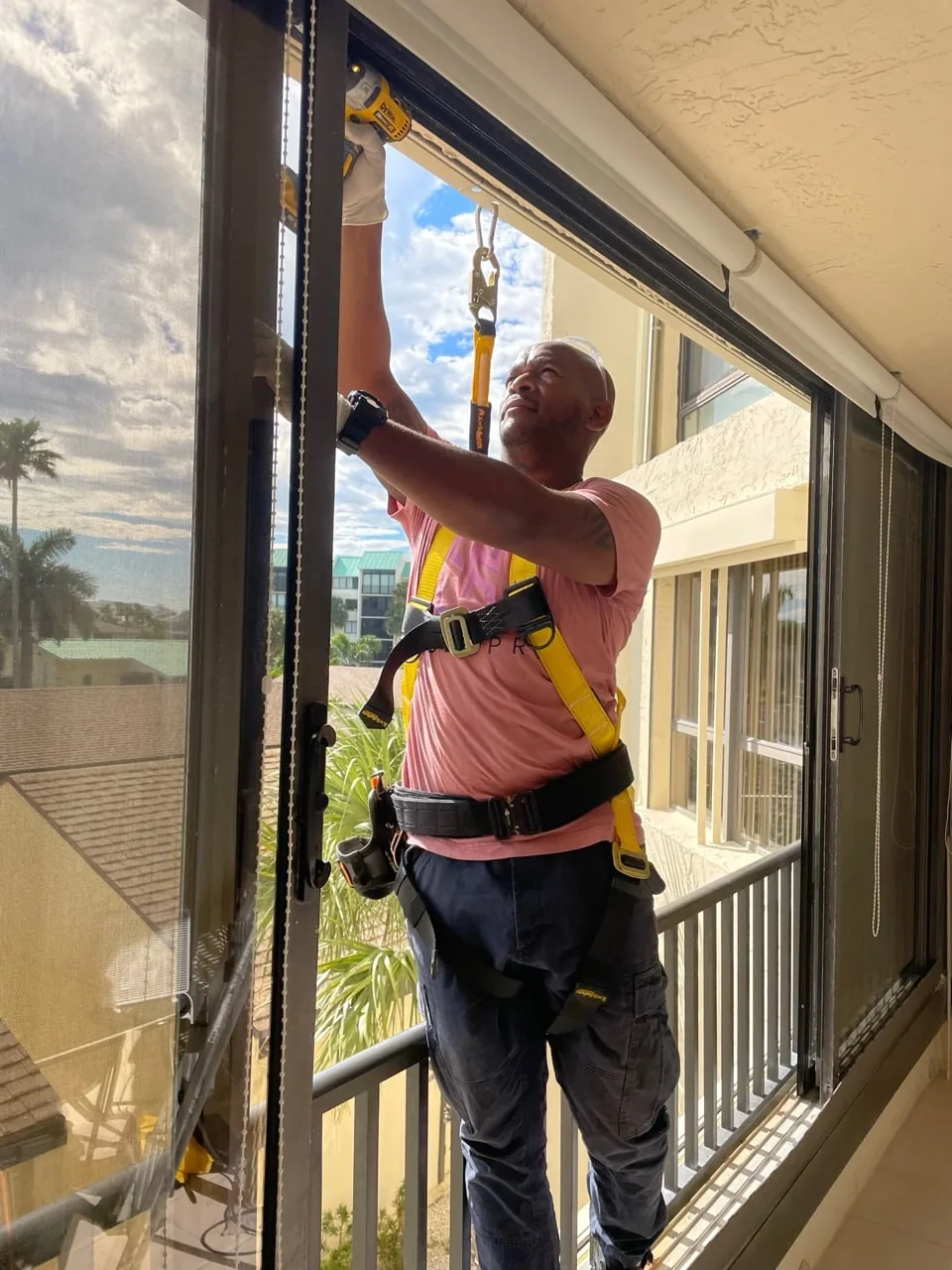
Doors that stick, grind, or jump the track almost always come down to worn rollers. We replace them with heavy-duty stainless rollers so your door glides with one finger again.
About this serviceWe repair torn, sagging, or sun-damaged screens using your existing frames — for a fraction of the cost of a new screen, so bugs stay outside where they belong.
About this serviceBroken pane, cloudy seal, or stained glass? We replace the pane in your existing frame — safely removing the old glass and fitting new, so the fix is permanent, not a temporary shine.
About this serviceFactory latches are solid for everyday use. We add true deadbolts and secondary locks engineered for sliding doors, for an extra layer of security where it counts.
About this serviceDeep track cleaning, lubrication, alignment, and inspection — the tune-up that keeps small wear from turning into a seized door or a broken roller.
About this serviceA cracked arch is a glass problem, not a window problem. The new piece is cut to the shape of your existing opening — half-round, quarter-round or circular — so the frame and surround stay put.
About this serviceStruck impact glass cracks and stays put — that is the system working. In most cases the sealed unit is replaced inside the original frame, grids and all, instead of the whole window.
About this serviceJupiter packs every door environment we know into one town. Beach and inlet properties — Jupiter Inlet Colony and the A1A condos — run the classic salt clock, with bearings corroding toward seizure in five to ten years without maintenance. The Loxahatchee riverfront brings heavy panels and humidity. The golf communities, Jonathan's Landing and Admirals Cove among them, bring lanai doors with enormous duty cycles.
And then there is Abacoa, which deserves its own paragraph. Its villages went up in a compressed window from the late 1990s through the 2000s, which means the original door hardware across the entire development is ageing out simultaneously. We see it as a wave — the same builder-grade roller, the same failure, street after street. If your Abacoa slider has started sticking, it is not your house; it is the cohort. The upside is that these doors are thoroughly familiar to us and the stainless replacements we fit are a clear grade above what the builder installed.
One more Jupiter-specific point: proximity to the Loxahatchee and its mangroves means biting midges, and standard insect screening does not stop them. Fine no-see-um mesh is a genuinely worthwhile upgrade near the river rather than an upsell.
Not listed? Call 772-722-4036 — this is a sample, not a limit.
Abacoa deserves its own mention: its villages went up in a compressed window around the late 90s and 2000s, which means the original door hardware across the whole development is aging out simultaneously. We see it as a wave — the same builder-grade roller, the same failure, street after street. If your Abacoa slider has started sticking, it isn't your house; it's the cohort. The upside is we know these doors intimately, carry their patterns on the truck, and the stainless replacements we fit are a grade above what the builder installed.
Either works, but 561-566-2855 is our Palm Beach County line — a legacy of where SliderPro started. Jupiter sits comfortably inside our regular coverage, not at the edge of it.
No — cohort aging. Abacoa's homes were built in a tight window with the same builder-grade door hardware, so entire streets hit roller end-of-life together. We regularly service multiple neighbors in the same week; some streets coordinate visits, which makes scheduling efficient for everyone.
Yes, and close to the Loxahatchee and the mangroves we actively recommend them. Standard mesh openings are large enough for no-see-ums to pass straight through; fine 20×20 mesh stops them while keeping airflow. We re-screen porches and sliders with it routinely in Jupiter.
Yes — heavy impact-glass balcony sliders in salt exposure are core work for us. We handle association logistics, use sealed stainless hardware suited to the environment, and recommend annual service for directly ocean-facing units.
Abacoa and its villages, Jupiter Farms, Egret Landing, Maplewood, the Indiantown Road corridor, the golf communities including Jonathan's Landing and Admirals Cove, the riverfront along the Loxahatchee, and the beachside including Jupiter Inlet Colony.
Entirely normal, and it is a build-date effect. Abacoa went up in a tight window with the same builder hardware throughout, so whole streets reach roller end-of-life together. Some neighbors coordinate visits, which makes scheduling more efficient for everyone.
It often is, but your declaration of condominium is the only document that settles it. A common split puts the glass and outer frame on the association as part of the building envelope, while the operating hardware — rollers, track wear, latches, screens — falls to the unit owner because it serves only your unit. Ask your manager to point you to the specific section before you commission anything glass- or frame-related.
Same-day service is available when the schedule allows, and 96% of our jobs across 1,600-plus doors are finished in one visit. A single door needing rollers and a track service is usually an hour to ninety minutes. A house with several sliders is an afternoon. What extends a visit is rail work, a heavy impact panel that needs two people to lift out and re-hang, or a screen that has to come off and be re-meshed while we are there. If what we find on arrival changes the plan, you hear it before we start rather than reading it on the invoice.
Repairs start at $275, and that includes parts, labor and a written 1 to 3 year warranty on the work. It is not a diagnostic fee with the real cost behind it. The number moves with how many panels actually move, how heavy the glass is, whether the rail under the rollers needs dressing, and how many doors in the house you want done in the same visit. Tell us what the door is doing and roughly when the house was built and we can usually narrow it down over the phone.
Get them moved and get them looked at on both ends of the season. A door that never slides lets the damp salt film sit on one spot of the bearing for six months in a closed, humid house, so corrosion runs continuously instead of being wiped off daily. Ask whoever checks the property to slide every door a few times a month. Then have them serviced before you leave and again when you arrive, so nobody discovers the seized one by putting a shoulder into it. That first shove is what turns a roller job into a bent housing.
Usually not, and we will tell you when it is the other way round. Glass and frames do not wear out from being slid; hardware does. A heavy, grinding, badly latching door is nearly always rollers, rail condition and alignment. Replacement genuinely wins in four cases: the frame has corroded through, the opening has moved structurally, water is coming in through the frame itself rather than a blocked weep hole, or you want a rated impact assembly that the existing frame can never become. If yours is one of those, we say so, and we do not sell you the replacement.
Usually not. White powder on aluminum is surface oxidation, and on a painted or anodized frame it means the finish has given up rather than the metal. It looks bad and it holds salt against the surface, which is worth cleaning off, but it is cosmetic until it becomes pitting you can feel with a fingernail. What actually decides the door's future is whether the sill and jamb have lost section, and whether the rail the rollers run on is worn or deformed. We check both before saying anything about replacement.
Also serving nearby:
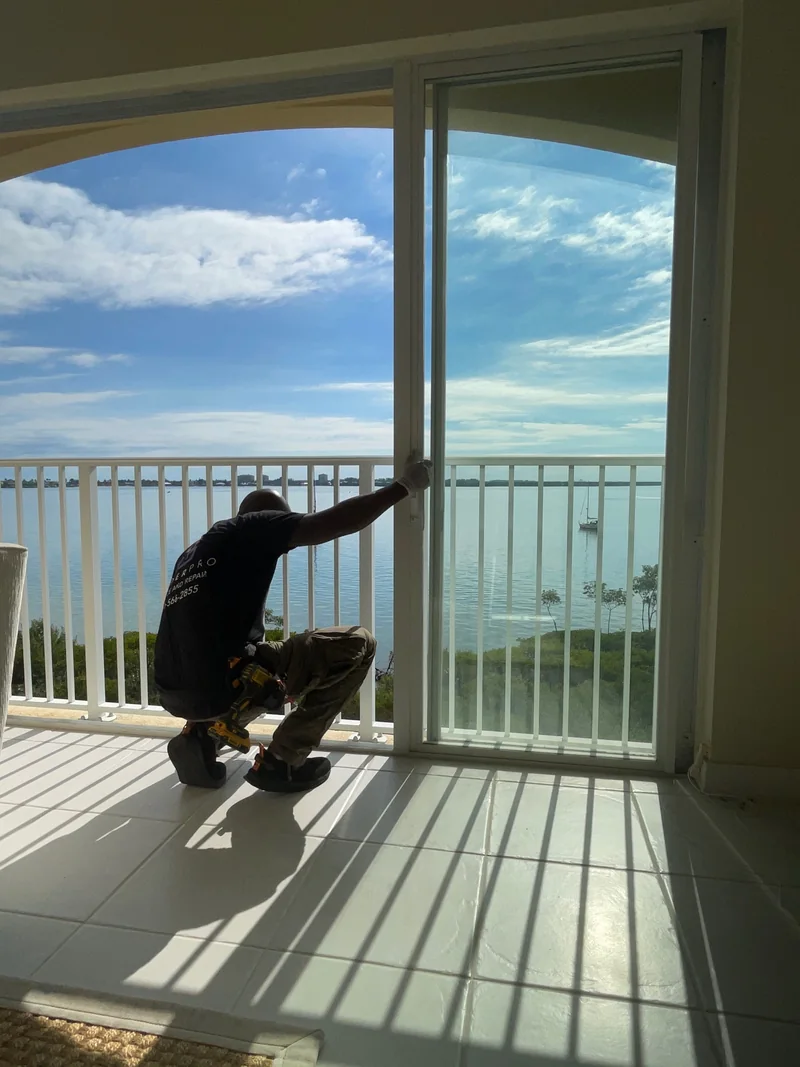
Impact glass protects the slider every hour of the year. Shutters protect it when someone closes them. Here's how the five common options compare on protection, effort, insurance and upkeep.
Read the guide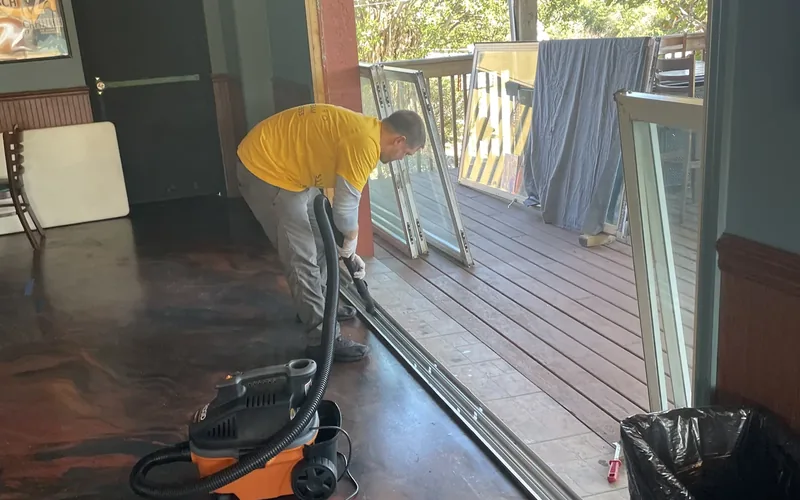
A four-panel stacking slider or a door that pockets into the wall isn't a big version of a patio door. It's a chain of panels that pull each other, a hidden track that collects sand, and a lot more rollers. Here's how they fail and what fixing them involves.
Read the guide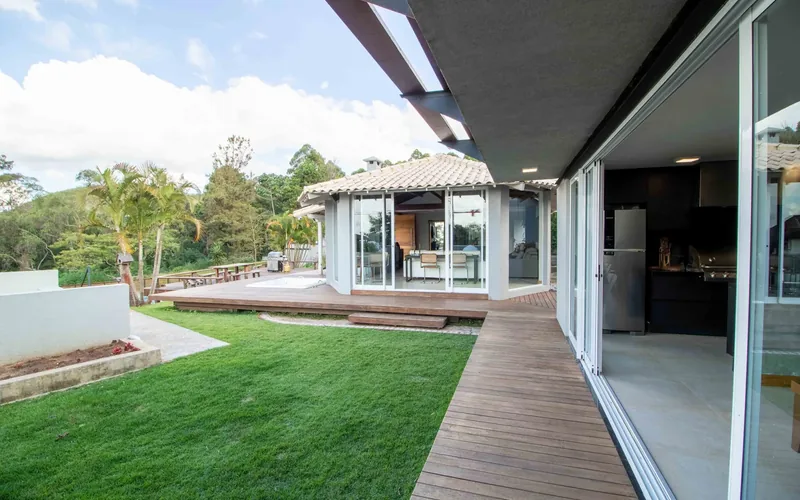
A door that doesn't move corrodes faster than one that does. Here's the week-before-you-leave routine for your sliders, how to handle shutters and storms while you're gone, and the order to check things when you come back.
Read the guideEvery repair company in Jupiter will tell you salt air is hard on doors. Here is the part they leave out, because it changes what you should do about it.
Salt is hygroscopic. The crystals that land on your track pull water vapor out of the air and hold it, so the salt film never really dries. What sits on your rail is not dust, it is a permanently damp brine, and brine conducts. That is the ingredient corrosion needs.
Inside a roller, the steel starts losing metal to that brine, and the corrosion product that replaces it occupies more volume than the steel it came from. The bearing swells and binds before anything looks wrong, which is why a door can turn heavy while the wheel still spins in your fingers. At the same time, a steel wheel on an aluminum rail with a salt film between them forms a galvanic cell. Aluminum is the more reactive metal, so the rail gives way first and pits. Smooth rail becomes rough rail, and rough rail eats rollers.
Near the inlet and along the Loxahatchee the humidity keeps that film wet for longer stretches than an inland address ever sees, which is the real reason beachside doors run on a five-to-ten-year hardware clock. It also means the cheapest intervention is mechanical: get the film and the grit off the rail before it does the work. That is most of what a maintenance visit is for.
Jupiter holds four decades of door hardware, and the year the house went up predicts most of what we will find.
Weight is the thread running through all of it. A heavier door is not just harder to push, it concentrates more load on a smaller contact patch, which is why the same roller lasts a decade on one door and three years on another two streets away.
We repair for a living, so the useful question is whether we would ever tell you not to. We would. The check runs in this order.
Replacement genuinely wins in four situations: the frame has corroded through, the opening has moved structurally, water is entering through the frame itself rather than a blocked weep hole, or you want a rated impact assembly that the existing frame can never be. Everything else on the usual list, including a heavy multi-panel system that someone has quoted five figures to replace, is hardware. Glass and frames do not wear out from being slid. Rollers, rails and latches do.
On a balcony door there is a paperwork question sitting in front of the repair question. It is worth settling before you approve anything.
Florida condominium documents routinely split one door between two parties. The building envelope, usually meaning the glass and the outer frame as originally installed, tends to sit with the association. The components that serve only your unit, meaning rollers, track wear, latches, handles and screens, tend to sit with the owner. Your declaration of condominium is the document that actually decides it, and no two are identical.
The practical version: a dragging, grinding or unlatching door is usually yours, and waiting on a board for it just costs you the use of the door. Anything touching the glass, the frame or a water leak deserves an email to your manager before work starts, because a repair can erase the evidence of where the water was coming from.
The clause-by-clause version is in our condo and HOA guide. It is general guidance rather than legal advice about your building.
Doors in part-time houses fail differently from doors in full-time ones, and the difference is not neglect. It is stillness.
A door that gets used every day cleans its own rail. Each pass drags the damp salt film and the grit out from under the wheel. A door that has not moved since April leaves that brine sitting on one spot of the bearing for six months, inside a closed house where the humidity climbs and nothing dries out. The corrosion that would normally be interrupted daily runs without a break.
The damage usually is not done over the summer, though. It is done in the first ten seconds back, when someone leans into a seized wheel and the housing bends, the panel jumps the rail, or the screen tears. That is a bigger repair than the one they arrived with.
Two fixes, both cheap. Ask whoever checks the house to slide every door a few times a month. And have the doors looked at before you leave and again when you get back, so they are serviced rather than forced. Where a caretaker or property manager holds the keys, that is an ordinary arrangement and we report back with photos of the work.
Close to the Loxahatchee and the mangroves, the complaint is rarely mosquitoes. It is the insects that get through a screen that is doing its job perfectly well against everything larger.
Mesh is sold by the count of strands per inch in each direction. Standard insect screening is 18x14, which stops mosquitoes comfortably. Biting midges, the ones everyone calls no-see-ums, are small enough to pass straight through those openings, which is why a brand new screen can still leave you bitten on the lanai at dusk. Tighter 20x20 mesh closes that gap, at a real cost in airflow and a slight loss of view. Which trade you want depends on how close to the water you are and how much you use the space in the evening. We set the whole comparison out in the no-see-um mesh guide.
The other half of the problem is not the mesh at all. Florida sun photodegrades screen fabric, which is why old mesh goes chalky and brittle, and the vinyl spline that holds it in the frame shrinks and hardens with it. That is what makes an aging screen sag and then tear at the same corner every time. It is a re-mesh of the frame you already own, not a new door.
Jupiter's mail geography is simpler than its street geography. 33458 covers most of the town, including Abacoa and the Indiantown Road corridor. 33477 is the eastern, beachside end toward the inlet. 33478 is Jupiter Farms, west of the turnpike. 33468 is a post office box ZIP rather than a delivery area, so if that is your mailing address, tell us the street address when you book.
Those three delivery ZIPs cover four genuinely different door environments: full ocean and inlet exposure on the east side, brackish river humidity along the Loxahatchee, twenty-year-old builder hardware in the planned neighborhoods, and larger inland lots on the Farms side where salt barely registers and track grit does the wear instead.
Not sure which you are in, or not seeing your neighborhood on the list above? Call 561-566-2855 and tell us the cross streets. Jupiter is regular route for us, not an outlying stop, and the surrounding towns are covered from the same route.
Honest quotes and repairs usually finished in a single visit — call or send the form.