A double-pane sliding glass door is better than a single-pane one at keeping heat out, it fogs and sweats far less on humid mornings, and it's somewhat quieter. In Florida, though, most of the energy benefit comes from the coating on the glass (low-E) and the door's solar heat gain rating, not just from having two panes. The trade-off nobody mentions is weight: a double-pane panel carries roughly twice the glass, and all of it rides on two small rollers.
We repair sliders, so this comparison leans toward what each glass type does to the door over the years, and what your realistic upgrade options are if you're living with an old single-pane aluminum door right now.
Single-pane vs double-pane sliding glass doors in a Florida home
| Factor | Single pane | Double pane (insulated glass unit) |
|---|
| What's in the frame | One sheet of tempered safety glass | Two sheets sealed around a spacer, with dry air or gas between them |
| Solar heat coming in | High unless the glass is tinted or coated | Lower, and much lower with a low-E coating |
| Heat conducted through the glass | High | Much lower, and lower still with low-E and gas fill |
| Condensation on the glass | Common on the outside face on humid mornings | Rare on either face; fog between the panes means the seal failed |
| Noise | Thin glass, little damping | Somewhat quieter; laminated or mixed-thickness units do better |
| Panel weight | Lighter, easy on rollers | About twice the glass weight for the same lite thickness |
| What fails | Rollers, track, weatherstrip; glass rarely | Same, plus the edge seal of the glass unit |
| Typical upgrade path | New glass unit if the sash can take it, new panels, or a new door | Replace a fogged unit in the existing panel |
What's actually different between a single-pane and a double-pane slider?
A single-pane door has one sheet of glass in each panel. A double-pane door has an insulated glass unit: two sheets held apart by a spacer bar, sealed at the edges, with a sealed pocket of dry air or gas between them. That sealed pocket is what slows heat and keeps the inner glass near room temperature.
Both kinds use safety glass, since glass in a door has to be tempered or laminated. The spacer around the edge of a double-pane unit usually holds a desiccant, a drying agent that soaks up any moisture trapped during manufacture. Many units also have a low-emissivity (low-E) coating on one of the inner faces, and some are filled with argon instead of air.
From the outside you can usually tell which you have in a few seconds. Look at the edge of the glass where it meets the frame. A double-pane unit shows a metal or foam spacer strip running around the perimeter, and if you hold a lighter or a pen tip against the glass you'll see two reflections. A single pane shows one reflection and no spacer.
Does a double-pane sliding door really save energy in Florida?
Yes, but the number that matters most here is the solar heat gain coefficient (SHGC), not the second pane. A double-pane unit with a good low-E coating blocks far more solar heat than plain double pane, and plain double pane blocks only a bit more than single.
Two different kinds of heat move through a door. Conducted heat flows from the hot side to the cold side through the glass, and the gap between two panes slows it down; that's what the U-factor measures. Solar heat is sunlight passing straight through the glass and warming whatever it lands on; that's what SHGC measures. On a west-facing Florida lanai at four in the afternoon, the sunlight is the bigger load.
The NFRC's consumer guide to window ratings explains that both numbers are rated on the whole product, frame included, and that lower is better for each in a hot climate. ENERGY STAR sets its door limits by how much of the door is glass. Its current criteria for residential doors require a door that's more than half glass, which is every slider, to reach a U-factor of 0.28 or lower and an SHGC of 0.23 or lower in the Southern zone, which covers the Florida peninsula. A plain single-pane door doesn't come close to those numbers. Neither does a lot of older uncoated double pane.
The frame matters too. Older aluminum frames without a thermal break conduct heat straight through the metal, so even perfect glass sits in a frame that's warm to the touch. Our guide to low-E vs clear glass on sliding doors covers the coating side of the decision. And before you spend anything on glass, rule out the cheap losses. A door that has sagged on worn rollers or lost its weatherstrip can leak more air than the glass loses by conduction, which is the point of our sliding door energy efficiency guide.
Why does a single-pane door sweat, and does double pane stop it?
Condensation forms on any surface colder than the dew point of the air touching it. In a Florida summer the air outside is warm and loaded with moisture, and the air conditioning keeps your single pane of glass cool. The outside face of the glass ends up below the outdoor dew point, so water beads on it, often thick enough to run down onto the sill. On the few cold winter mornings we get, it can happen the other way round, on the inside face.
A double-pane unit breaks that link. The sealed gap means the outer pane stays close to outdoor temperature and the inner pane stays close to indoor temperature, so neither face is likely to dip below the dew point of the air it touches. Sweating on the glass mostly goes away.
The catch is the edge seal. If it fails, humid air gets into the gap, the desiccant saturates, and you see fog or a white film between the panes that no amount of cleaning removes. That's a failed unit, not a dirty one. It doesn't happen to single pane because there's no gap to fog. Our guide to a foggy sliding glass door and a broken seal covers why units fail and what replacing one involves.
Is a double-pane sliding door quieter?
Somewhat. Sound passes through glass by making it vibrate, and heavier, stiffer or damped glass vibrates less. Two panes with an air gap give the sound two barriers to cross, so most double-pane units are quieter than a single thin pane. The improvement is smaller than people expect, though, because two panes of the same thickness tend to resonate at the same pitch and pass some sound together.
Units with panes of different thickness, or with one laminated pane, do better because the plastic interlayer in laminated glass soaks up vibration. And on most sliders the glass isn't the main path anyway. Sound gets in through the gaps: a flattened interlock seal, worn pile weatherstrip, a panel that has dropped and no longer meets the jamb. If traffic noise is the complaint, check the seals before blaming the glass. Our guide to sliding door seals and weatherstripping covers what to look for.
How much heavier is a double-pane panel, and what does that do to the rollers?
Roughly twice the glass weight for the same lite thickness. Glass weighs about 1.6 pounds per square foot for every eighth of an inch of thickness, so a 20-square-foot panel carries around 33 pounds of eighth-inch glass in single pane and about 65 pounds in a double-pane unit, before the frame.
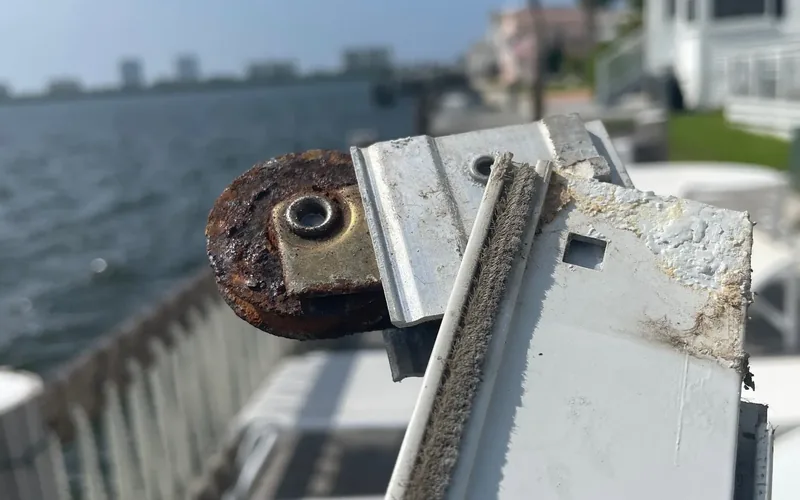
Every pound of that sits on two rollers, each a small wheel on a bearing riding an aluminum rail. More weight means more pressure where the wheel meets the rail. That speeds up bearing wear, flattens plastic wheels sooner and, once a bearing seizes, turns the wheel into a skid that grinds a groove into the track. Heavier panels also flex the bottom rail of the sash more, which can let a roller housing tilt.
This matters most when glass is upgraded in an existing door. A sash built for single pane came with rollers sized for single pane. If heavier glass goes in and the rollers stay, expect the door to get heavy to push within a few years. Our comparison of sliding door roller types explains which wheel and bearing suit a heavier panel, and roller replacement is the repair we do most often on doors that have had a glass upgrade without one.
What about the old single-pane aluminum sliders in older Florida homes?
A great many Florida houses from the 1960s through the 1980s still have their original single-pane aluminum sliders, often with plain tempered glass and frames with no thermal break. Plenty of them are still structurally fine. The frames don't rot, and aluminum holds up for decades if the drainage works. What wears out is the moving and sealing hardware: rollers, track, latch and weatherstrip.
That gives you a real choice. If the door is solid and only drags, leaks air or won't lock, repairing the hardware gets you a door that works properly again, without changing its energy performance. If the heat coming through it is the problem, glass is the lever, and that's where the upgrade paths below come in. Older sliders were also built before impact rules applied to most openings, so if you're near the coast, read our comparison of impact glass vs double pane before choosing new glass.
Can you put double-pane glass in an existing single-pane sliding door?
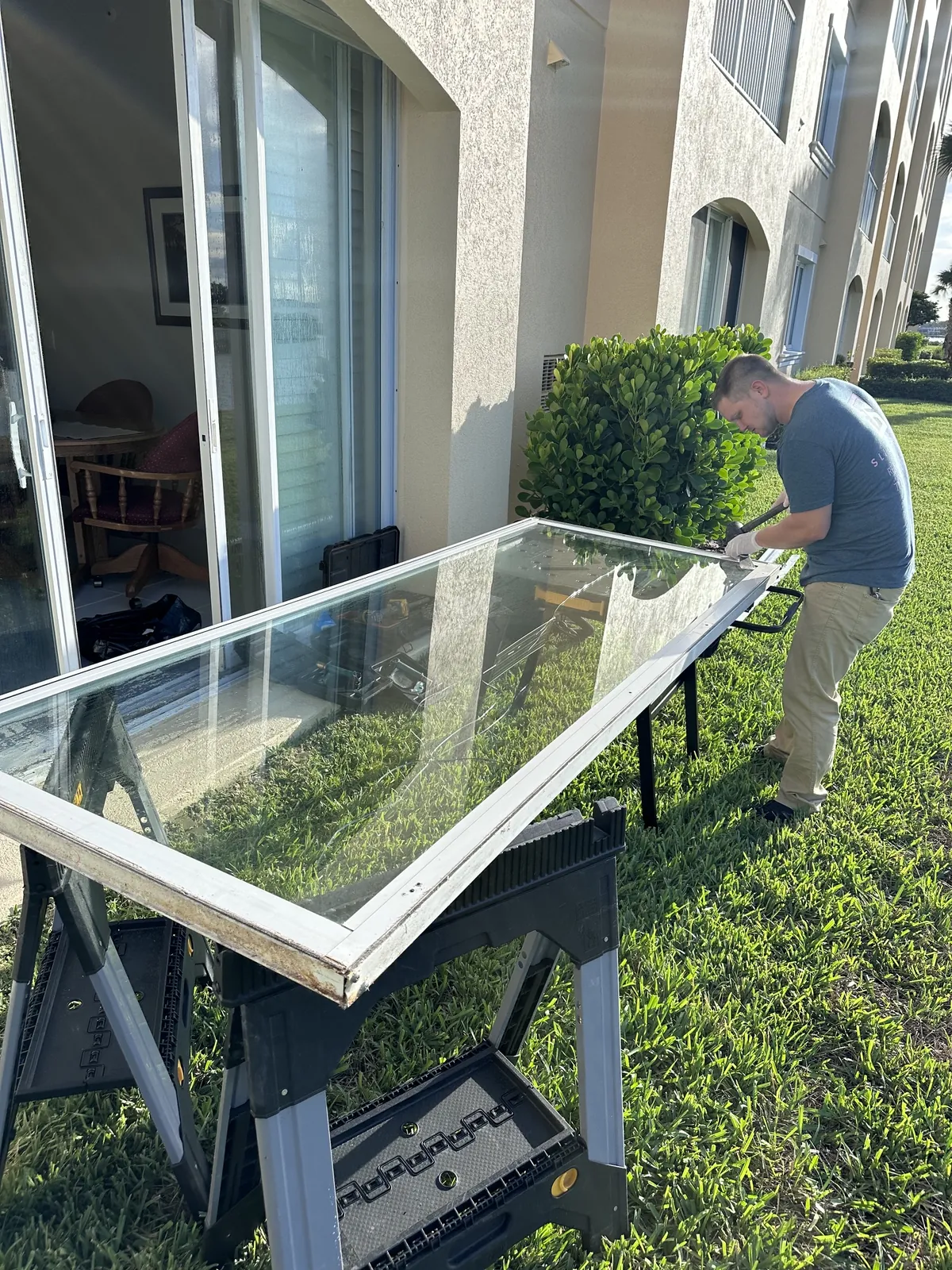
Sometimes. It depends on whether the glazing pocket in the panel's frame is deep enough for a thicker unit. A single pane is a few millimeters thick; an insulated unit is usually far thicker. If the pocket can't take it, the options are new panels in the old frame or a new door.
There are three upgrade paths, and they differ a lot in disruption:
- A new glass unit in the existing panel. The panel comes out, the old glass and glazing bead or gasket come out, and a sealed unit made to size goes in. This works when the sash was designed with a pocket that fits an insulated unit, or when the manufacturer offers a glazing adapter. It's the least disruptive route. Our glass replacement service handles pane and unit swaps in existing panels, and we'll tell you after measuring whether your sash can accept one.
- New panels in the existing frame. Some manufacturers make replacement sashes that fit their older frames. This keeps the frame, the stucco and the interior trim intact. It depends on the door's brand and series still being supported, which is why it helps to identify your door's brand and series first. The etched mark in a corner of the glass and any stickers on the frame edge are the places to start.
- A new door. When the frame is corroded through, the sill has failed, or you need impact protection the old frame was never tested for, a new door is the honest answer. In Florida that's usually a permitted job with a product approval, and it's work for a door installer.
One more consideration with path one: the heavier glass needs rollers sized for it, and the old latch and weatherstrip are often worn by the time anyone upgrades the glass. Doing them in the same visit avoids paying for the panel to come out twice.
What drives the cost of each option?
We can't give a fair single price for glass or doors, because the job varies too much. These are the things that move the number:
- Panel size. Glass is priced by area, and oversized panels need more hands and care to remove.
- Glass make-up. Plain double pane, low-E, argon fill, tint, and laminated or impact lites each add cost to the unit.
- Whether the sash can take the unit. A direct swap costs least; adapters, new sashes or a new door cost progressively more.
- Hardware that should be replaced at the same time. Rollers, weatherstrip and latch work add to the visit but save a second one.
- Access. Ground-floor patios are simpler than balcony doors on upper floors.
- Permits and approvals. A new door usually means a permit and, in a condo, association sign-off. Glass work in an existing panel often doesn't, but check with your building department and association.
Single pane or double pane: which should you choose?
- If your single-pane door works and the room stays comfortable, keep it and maintain the hardware. Glass alone doesn't justify replacing a sound door.
- If the room overheats in the afternoon sun, choose double pane with a low-E coating and a low SHGC. Plain uncoated double pane is a smaller step than it sounds.
- If the glass sweats on the outside every humid morning, double pane fixes that, as long as the seal holds.
- If you're near the coast and need storm protection, don't stop at double pane. Look at laminated impact units, including insulated impact glass that's both.
- If you're upgrading glass in an existing panel, plan new rollers sized for the heavier unit in the same job.
- If your double-pane door has fogged between the panes, replace the glass unit, not the door.
- If the frame is corroded through or the sill leaks structurally, replace the door and stop putting money into glass.
If you're not sure which camp your door falls in, send us photos of the door, the glass edge and the track. We'll tell you whether it's a repair, a glass job or a replacement. Our repairs start at $275 and that covers parts, labor and a written 1 to 3 year warranty.