Sliding doors on the Space Coast don't all wear out the same way. On the Cocoa Beach barrier island, ocean salt and blown sand attack the rollers and track fastest. Along the Banana and Indian River lagoons, brackish air corrodes more slowly but never lets up. In inland Palm Bay, it's sand, sun and daily use that wear a door down. And everywhere in Brevard, summer storms test whether the sill can drain. Here's what each zone does, and what usually fails first.
Why do sliding doors on the Space Coast fail differently from town to town?
Because Brevard has three very different exposures within a few miles of each other: the ocean, the lagoons and the inland mainland. Each one attacks a door through a different mechanism, so the first part to fail changes with your address.
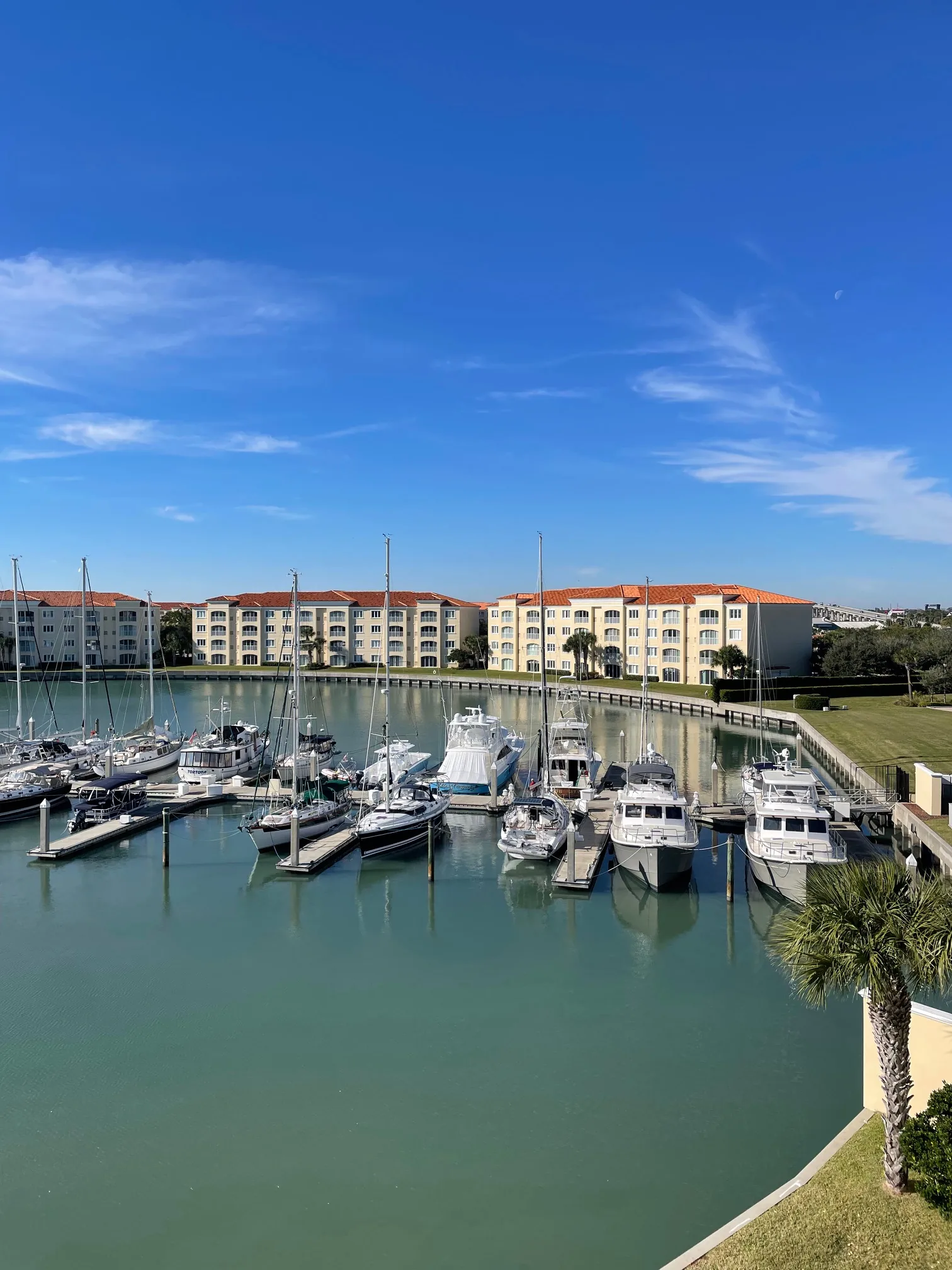
Look at a map of central Brevard and the pattern is obvious. The barrier island that holds Cocoa Beach sits between the Atlantic and the Banana River. Merritt Island lies between the Banana River on the east and the Indian River on the west. And Palm Bay sits on the mainland along the Indian River, then stretches a long way inland, far from any salt spray.
Same county, same weather systems, same builders in many cases. But the main thing grinding on a slider in each place is different:
What wears a sliding door out in each part of central Brevard
| Zone | Main threat | What usually fails first | What helps most |
|---|
| Barrier island (Cocoa Beach) | Ocean salt spray plus blown beach sand | Roller bearings seize; exterior track pits; screens tear | Fresh-water rinse of the exterior track; sealed stainless rollers |
| Lagoon and canal-front (Merritt Island, riverside Palm Bay) | Brackish air, constant humidity, spray off docks and seawalls | Slow bearing corrosion; lock hardware stiffens; weep holes clog | Regular track cleaning; keeping weep holes clear |
| Inland mainland (most of Palm Bay) | Sandy lots, pool-deck grit, sun, heavy daily use | Rollers wear from grit; tracks groove; seals dry out | Dry vacuuming the track often; replacing worn rollers early |
What does barrier-island salt do to a Cocoa Beach door?
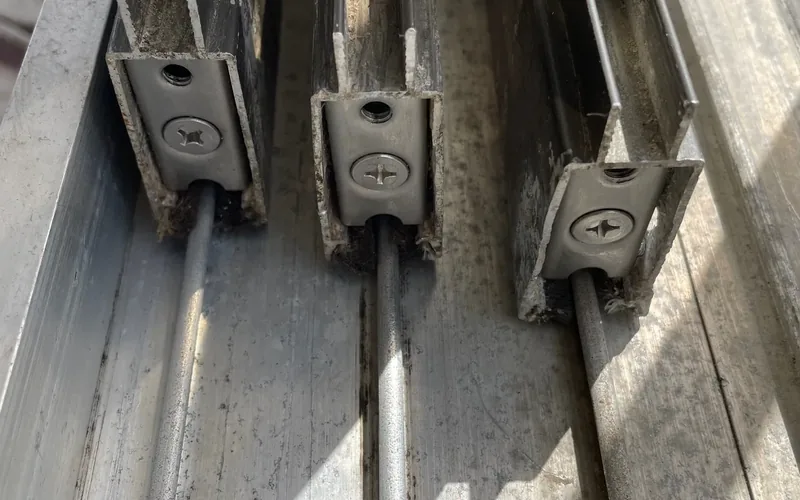
On the barrier island, a door gets two attacks at once. Onshore wind carries droplets of seawater that dry into salt crystals in the track and on the rollers. The same wind carries beach sand, which is mostly quartz and harder than both the steel in a roller and the aluminum of the track.
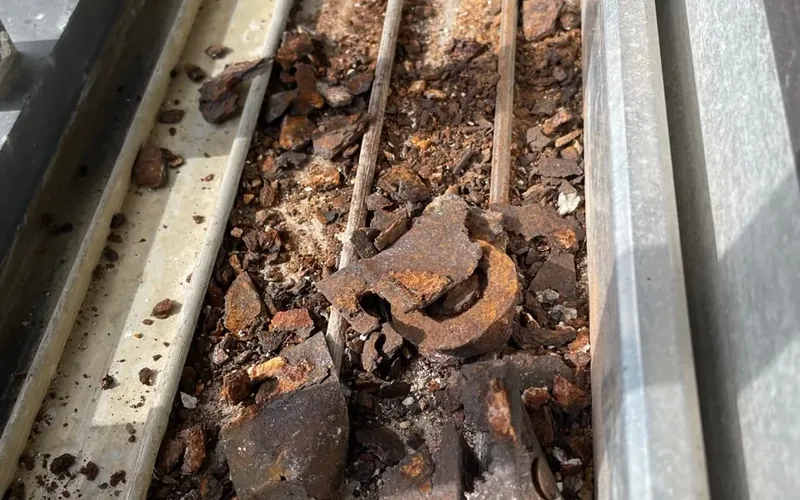
Those two work together. The salt film corrodes the bearings, roughening the surfaces that should roll smoothly. The sand grinds whatever surface is left. A bearing that's corroding and grinding at the same time fails faster than one facing either problem alone. Once it seizes, the wheel skids, and a skidding wheel loaded with a heavy panel cuts a groove into the track.
Beachside buildings add a twist: a balcony slider sits under the slab of the balcony above, which keeps rain from rinsing the door but doesn't stop sideways spray. We go into that in more detail in our guide to why oceanfront condo sliders wear out first. The short version for Cocoa Beach owners: salt goes on all year, and only you or a service visit takes it off.
Is a river-side or canal home on Merritt Island easier on doors?
Somewhat, but not by as much as people hope. The Banana River and Indian River are lagoons, a mix of seawater and fresh water. Brackish water carries less salt than the open ocean, but it still carries enough chloride to make an electrolyte on metal. A door on a canal or riverfront corrodes more slowly than one facing the beach, but it corrodes steadily, and it never gets a dry season off.
Two things keep river-side doors busy:
- Spray off docks and seawalls. Wind across open water kicks up spray that lands on homes right at the water's edge, often on the side with the big lanai slider.
- Constant humidity. With water on both sides of the island, the air rarely gets dry. Salt deposits stay damp and active longer than they would on a drier inland lot.
The failures tend to be slower and sneakier than on the beach: bearings that get gradually rougher, lock hardware that stiffens, weep holes that crust over and stop draining. That last one matters more than most owners realize, which brings us to storms.
What wears out sliding doors in inland Palm Bay?
Away from the river, salt drops off as a factor and three other things take over:
- Sand. Much of inland Palm Bay is built on sandy lots. Fine sand blows across yards and pool decks and settles in door tracks, where it acts like grinding compound on rollers and rails.
- Heavy daily use. The lanai or pool slider in a family home can get opened dozens of times a day. That's a lot of roller travel, and every stroke drags whatever grit is in the track along with it.
- Sun and heat. Long hours of direct sun bake the weatherstripping and screen mesh, and a dark aluminum frame in full sun gets hot enough to make seals brittle sooner.
Screen enclosures and pool cages change the picture a little. A caged lanai keeps leaves and insects out of the track, but pool-deck grit, sunscreen residue and splashed pool water still find their way in, and the slider inside the cage often gets more use than any other door in the house. The screen door on that slider wears fastest of all.
The result is mechanical wear rather than corrosion. Rollers wear down from grit, tracks develop grooves, and seals dry out and crack. These doors are often easier to repair than salt-damaged ones, because the metal underneath is usually sound. For a similar comparison between salt and no-salt wear across the state, see our guide to how Orlando and coastal doors wear differently.
Does rocket-launch vibration damage sliding doors?
We don't put launches on the list of causes. Launches are part of life on the Space Coast, and it's a fair question, but the damage we find on Brevard sliders is fully explained by salt, sand, water, sun and the weight of the panels. Nothing about a seized bearing, a pitted track or a cracked seal points to vibration as the cause.
If your door rattles during a launch, that rattle is a symptom worth noticing, but not because of the launch. A panel that rattles is usually loose in its frame: worn rollers have let it drop, or the weatherstripping is flattened, so the panel isn't pressed firmly against its seals. The same looseness lets in air and water during storms. Fix the looseness, and the rattle goes away with it.
How do summer storms get water past a sliding door?
The Space Coast gets rain almost every summer afternoon. The National Weather Service office in Melbourne notes that June through September are the wettest months, with the rainy season most often starting in the third or fourth week of May, and that the daily collision of the Gulf and Atlantic sea breezes often produces widespread storms with heavy rain.
That's a lot of water hitting a door sideways. Sliding doors deal with it through drainage, not a perfect seal. FEMA's recovery advisory on water intrusion through windows and doors describes most sliding doors as "contain and drain" products: they let water into an integral sill pan, hold it behind a raised riser on the inside, and drain it out through weep holes. The advisory also notes that some homeowners remove that riser as a trip hazard, which leaves the door with little resistance to water.
In practice, that means storm leaks on Brevard sliders usually come from one of three things:
- Weep holes plugged with salt crust on the beach or the river, or with sand inland, so water in the sill pan can't get out.
- Worn weatherstripping or a sagging panel that lets wind push water past the seals.
- A missing or damaged sill riser, removed or broken at some point.
Our guide to why a sliding glass door leaks walks through how to find which one is yours.
What should Brevard owners check after a big storm?
After any storm that brought real wind, go door by door before you start sliding things. Storms leave two kinds of problems on a slider: debris that's been driven into the track, and salt that's been driven into places it doesn't usually reach. On the barrier island and the river, wind-driven spray can coat a door that normally sits in the lee of the house.
- Look for water at the sill and on the floor nearby. If it came in, note which door and where. That points to the weep holes, the seals or the riser.
- Brush and vacuum the exterior track before the first full slide. Leaves, roof grit and sand packed into the track will grind the rollers if you force the door through them.
- Rinse salt off the exterior track and the weep holes with fresh water, especially on beach and river homes.
- Slide gently and listen. A door that drags after a storm but was fine before usually has debris in the track or a panel that shifted.
- Check the glass and the lock. Photograph any damage before you touch it.
Our hurricane season checklist covers the post-storm salt flush in more detail, along with what to do before the storm arrives.
What fails first on older beachside homes and condos?
A lot of Brevard's beachside housing and condo stock has been around for decades, and so have many of its doors. On older aluminum sliders, the pattern is consistent:
- Original steel rollers go first, because plated steel corrodes quickly in salt air once the plating wears.
- Locks and latches are next. Older die-cast lock bodies corrode and stiffen, and a sagging panel means the latch no longer meets its keeper.
- Screens tear, and their small rollers seize even faster than the door's.
- Exterior tracks pit and groove, especially under rollers that were left to skid.
The good news is that most of this is repairable. The frame and glass on an old aluminum door often have plenty of life left, and rollers, locks and screens can be replaced. The challenge is matching parts for older or discontinued doors, which is why photos of the door, the rollers and any labels help so much before a visit. Our security locks and latch repair page covers what we can do with older lock hardware.
What can you do yourself, depending on where you live?
A few habits go a long way, and they differ a little by zone:
- On the beach: vacuum out sand, then wipe the exterior track and weep holes with fresh water every few weeks. Keep the door moving; a door used daily corrodes more slowly than one left locked.
- On the river or a canal: clean the track and check the weep holes before the summer storms start in May, and again partway through the season.
- Inland: dry-vacuum the track often, especially on the pool or lanai door, and replace rollers when the door first feels heavy, before they groove the track.
- Everywhere: skip the oil sprays. Use dry silicone on a clean track if anything at all, and never caulk the weep holes shut.
And when a door needs more than cleaning, the first repair is usually the rollers. Our roller replacement page explains how we pick hardware for a door's real weight and exposure, and a maintenance visit covers every slider in the house at once.
If you're in Cocoa Beach, Merritt Island or Palm Bay and your slider is dragging, leaking or rattling, send us photos of the door and the track. Repairs start at $275 and that price includes parts, labor and a written warranty of 1 to 3 years. We'll tell you what's worn and what it needs.