Short answer: Run a 90-second check at every turnover: the door glides with one hand, the latch catches first time without lifting, the screen is intact and slides, and the track is clear of sand. Add a monthly dry track vacuum and weep-hole check, one annual service of every slider before high season and hurricane season, hardware guests can't misuse, and a written door file the next manager inherits.
No door in Florida works harder than a rental's patio slider. Guests who don't know the door's quirks force it; renters who didn't pay for the hardware don't baby it; and a beach rental's slider cycles more in one booked week than many owner-occupied doors do in a month. Then it fails — always mid-booking, always urgently — and a hardware problem becomes a refund conversation and a one-star review that mentions "the door."
We service a lot of rental and seasonal properties across the Treasure Coast, from Jensen Beach island condos to PSL single-family rentals, and the owners who never get the 10 pm door call all run some version of the same checklist. Here it is.
The turnover check (every changeover, 90 seconds)
Between guests, whoever turns the property should run four fast tests on every slider:
- Glide test: the door opens with one hand, smoothly, full travel. New resistance or noise gets reported, not ignored — early-stage roller wear is a cheap fix and a guest-proof one.
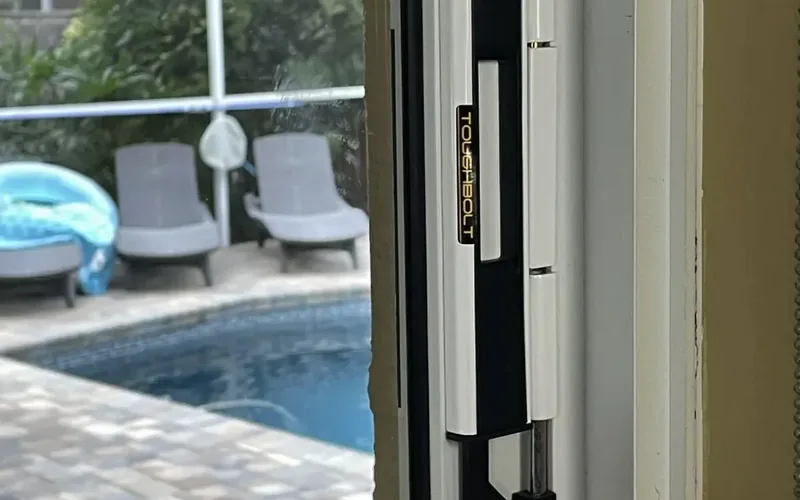
- Lock test: latch catches positively on the first try, no jiggling ritual. A door guests can't easily lock is a door guests leave unlocked — your liability, their property.
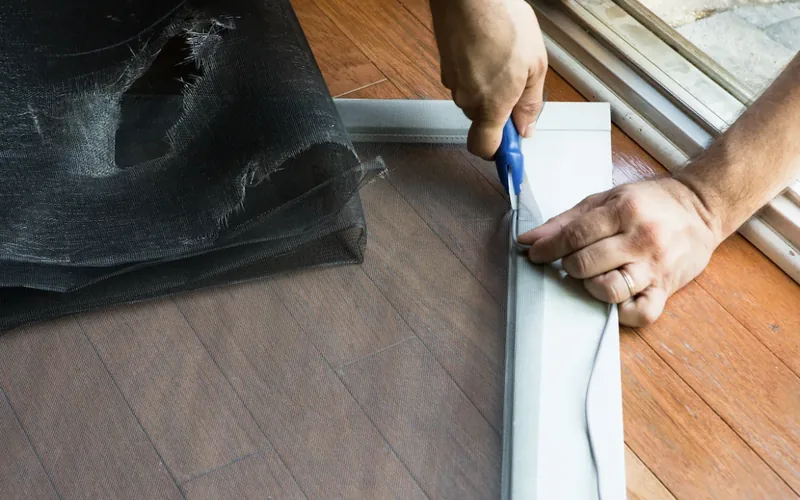
- Screen scan: tears, holes, sagging fabric, and a screen door that actually slides. Screens take the most guest abuse of anything on this list.
- Track glance: visible sand and debris gets a quick vacuum. Beach rentals import astonishing quantities of sand per booking.
Spec hardware for guests, not owners
An owner adapts to a door's quirks; a guest is meeting it for the first time, possibly at night, possibly after cocktails. Rental doors should be boring: rollers in good condition so no technique is required, a quality lock that works intuitively on the first try, and — this is the one owners skip — hardware robust enough to survive being operated wrong. Guests will slam it, force it against a locked latch, and let children swing on the handle. Stainless, sealed-bearing rollers and solid locksets shrug this off; builder-grade hardware files it all away for your busiest week.
Screens deserve the same thinking: pet-resistant mesh on rental screen doors is one of our most-recommended upgrades even for pet-free properties, because it's really guest-resistant mesh — it survives the beach chairs, the dogs that weren't disclosed, and the toddlers, on a re-screen cycle years longer than standard fabric.
Security is a liability line, not just a lock
A rental's sliding door lock isn't only protecting property — it's part of your duty of care to the people staying there. A back slider that doesn't lock properly, in a property you rent to the public, is a problem you want solved before it's ever part of an incident report. The full hardening sequence from our slider security guide applies doubly to rentals: aligned door, real deadbolt, track lock guests can understand at a glance. Skip cleverness — security hardware that confuses guests gets left disengaged.
The seasonal-property variant
Seasonal and snowbird properties invert the problem: instead of overuse, months of disuse — and idle doors corrode fastest, because nothing wipes the salt film off the bearings. The calendar that works: a service visit at season's end (clean, lubricate, lock down), and a check at arrival, ideally by whoever opens the house, with enough lead time that a seized door is fixed before the owner lands. We run exactly this circuit for property managers from Vero Beach to Palm Beach Gardens every fall.
Build the vendor relationship before the emergency
The 10 pm door call is survivable if the fix is one message away. Owners we work with on a standing basis get the between-guests turnaround, because we already know the property's doors, their roller patterns, and their history — the first visit's notes pay off on every visit after. An annual maintenance visit covering every slider in the unit, plus turnover checks in between, is the whole system: modest scheduled cost, in exchange for doors that never make it into a review.
Tell us about your property — single unit or a managed portfolio — and we'll set up the calendar that fits it.
Why do rental sliders wear out faster than owner-occupied doors?
It is not that guests are careless, though some are. It is that a rental door lives a mathematically harder life.
Cycle count. A booked beach week can put more open-and-close cycles through a patio slider than an owner-occupied door sees in a month. Rollers wear as a function of distance traveled under load, so a rental door ages on a compressed clock.
Grit load. Every arriving group brings sand in on feet, towels, coolers and chairs, and most of it ends up in the track. Quartz sand is harder than the aluminum track and harder than the steel in the rollers, so each pass of the door becomes a lapping operation that grinds wheel and track against each other.
No early warning. An owner notices the first faint grind and books a repair. A guest notices nothing, forces the door, and leaves. The failure that would have been caught at the cheap stage arrives fully developed, and it arrives mid-booking.
Doors left open. Rentals get aired out, propped open and left ajar far more than family homes, which means more salt aerosol and more grit reaching the track and the bearing surfaces.
None of this is a reason to over-specify. It is a reason to inspect on a schedule rather than on complaint, which is what the rest of this checklist is for. The underlying mechanisms are covered in why sliding doors stick in Florida.
What do guests actually do to a sliding door?
After a few years of turnover calls the damage pattern is remarkably consistent, and knowing it tells you where to look.
- They force it against a locked latch. The single most common cause of a bent keeper and a rounded latch hook. A guest who cannot work out that the door is locked pulls harder rather than looking.
- They lift the handle to make it catch. Once one guest discovers the trick, the door gets operated that way all week, and every cycle loads the latch and the top guide in a direction they were not designed for.
- They slam it. Wind takes the door, or someone with full hands lets it go. Slamming drives the panel into the jamb and, over a season, pushes the whole assembly out of square.
- They put things in the track. Beach chairs, coolers, wet towels and, more often than seems possible, sand poured out of shoes onto the sill.
- They push on the screen. The screen door takes the worst of it because it is light and it looks disposable. Torn mesh, a bent frame and a screen off its track are the three most common findings at turnover.
The useful conclusion is that almost all of it concentrates on the latch, the keeper, the screen and the track — which is exactly what a 90-second turnover check looks at.
Who preps the sliders when you are not there in storm season?
Hurricane season and rental season overlap, and the doors have to be storm-ready with the owner two states away.
Write the door items into the property's storm plan explicitly, because a cleaner or manager working from a generic checklist will not think of them. What belongs on it:
- Tracks cleared and weep holes proven to drain, before the season rather than during it. A blocked track is how an empty rental floods for hours before anyone notices.
- Every panel locked, and confirmed to latch without being lifted. A door that only catches when lifted is a door that gets left unlatched.
- Shutters run through a full cycle in June. Coastal shutter hardware corrodes on the same clock as door rollers, and a shutter that will not deploy is discovered at the worst moment.
- Lanai and balcony furniture inside. It is both a rule in most associations and the debris that breaks the glass.
- Photographs of each door, intact and dated, before the season starts.
Name the person responsible for each item in writing. The failure mode on rentals is never that nobody could do it; it is that the owner assumed the manager would and the manager assumed the cleaner had. Our hurricane prep guide covers the sequence in full.
Which association rules override your maintenance plan?
If the rental sits inside a condominium or an HOA, the association's documents outrank your maintenance calendar, and finding that out during a booking is expensive.
Four things to establish before you need them:
- Who owns which part of the door. Florida declarations commonly split the glass and outer frame from the operating hardware, which means your roller and latch work is yours to schedule while glass may not be.
- Whether the unit may be rented at all, and on what minimum term. Many associations restrict short-term rentals outright, and some restrict vendor access on behalf of short-term guests.
- What may be attached to the door. Uniform-appearance and frame-penetration rules govern secondary locks, film and anything visible from outside. This bites hardest on rentals, because guest-proof hardware is exactly the sort of thing owners add without asking.
- How vendor access works when nobody is in the unit. Requirements vary building to building, and the management office is the place to ask rather than guess.
Get the answers in writing from the manager and keep them with the property file, so the next manager inherits them. Our guide to condo slider responsibility sets out the vocabulary and the order to ask in.
What does the maintenance calendar actually look like?
Three tiers, and the whole point is that the cheap tier runs often enough to catch problems before the expensive tier is needed.
Every turnover, 90 seconds. Glide test, lock test, screen scan, track glance. Whoever cleans the property does it, and anything failing gets reported the same day rather than logged for later.
Monthly, 10 minutes. Vacuum every track dry, brush out the corners, wipe the sill, and check the weep holes on the exterior face are clear. Never wet, never oiled: an oil-based spray turns loose sand into grinding paste and glues it into the roller housings. Our track cleaning routine is the professional version of this.
Annually, one visit. Every slider in the property inspected together — roller condition, panel height, latch and keeper engagement, screen fabric and screen door rollers, weatherstrip and sweep condition, and the lift clearance that decides whether a panel can be removed from outside. Scheduling all of the doors into one appointment is the economical way to do it, and it is when worn parts get replaced at the cheap stage rather than the expensive one.
Set the annual visit before high season and before hurricane season rather than after either. Repairs start at $275 including parts, labor and a one-to-three-year warranty on both, and 96% of our jobs finish in a single visit.
What should you document, and what do you hand to the next manager?
Rental properties change hands — new managers, new cleaners, sometimes new owners — and the door history walks out of the door with the person who held it in their head. Write it down instead.
A one-page door file per property, kept with the rest of the property documents:
- A door inventory. How many sliders, where they are, how many panels each, and whether the glass is impact rated. Panel weight changes what hardware the door needs, and impact panels are considerably heavier.
- Repair history by door. What was replaced, when, and by whom. Roller replacements in particular, because knowing a door was done two years ago tells you something different from knowing it has never been touched.
- Photographs at each annual visit. Track condition, screen condition, and any damage found. Timestamped images settle guest-damage questions without an argument.
- Association answers in writing. Who owns which part of the door, what may be attached to it, and how vendor access works.
- The turnover checklist itself, printed and in the cleaning folder, so it survives staff changes.
Owners we work with on a standing basis get this by default, because the first visit's notes are what makes every later visit faster. If you are taking over a property, ask the outgoing manager for exactly this list before you inherit their surprises.