Roller Replacement
Doors that stick, grind, or jump the track almost always come down to worn rollers. We replace them with heavy-duty stainless rollers so your door glides with one finger again.
About this service
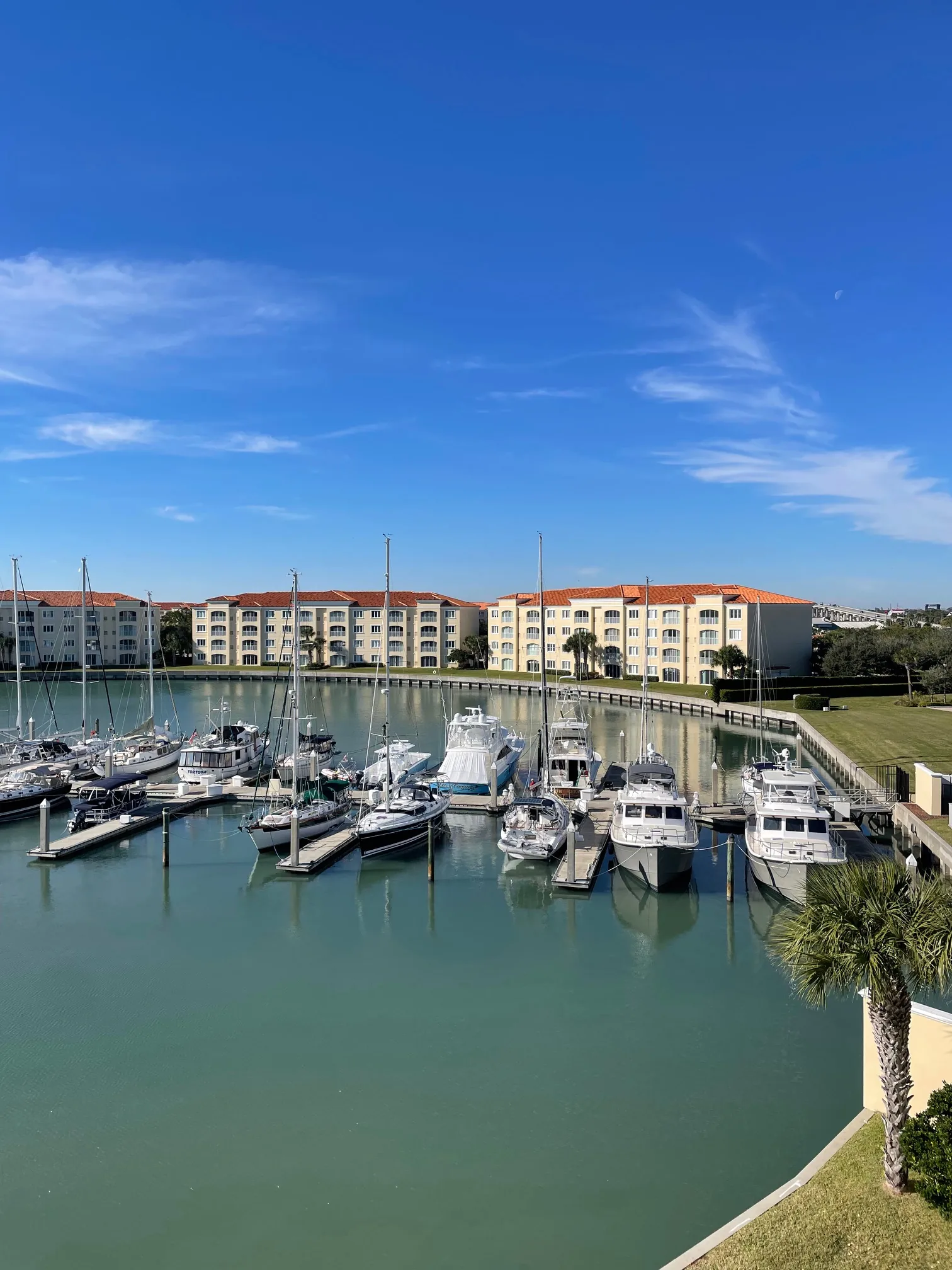
A working waterfront village where half the homes can see the Manatee Pocket — and where salt air works on door hardware year-round.
Port Salerno keeps its fishing-village soul — the working docks and seafood houses around the Manatee Pocket, the cottages and canal homes threaded between Salerno Road and the water, and newer communities filling in westward. For sliding doors, the Pocket is the defining feature: a sheltered, salty basin that keeps humidity and brackish air sitting over the surrounding streets in a way open coastline doesn't.
That still, salty air is quietly hard on hardware. Canal-front and Pocket-view homes show bearing corrosion patterns close to beachfront rates, and the village's older cottages are running sliders from the 70s and 80s whose original wheels gave up long ago — many owners have simply adapted to heaving the door open. Meanwhile the boating life adds its own wear: the patio slider is the main thoroughfare between house and dock, cycled constantly with wet hands, sandy feet, and fishing gear.
We service the whole spread — legacy cottage doors, canal-home sliders, and the newer construction off Cove Road — with the same repair-first approach: stainless rollers that stand up to the Pocket's air, deep track cleaning, screen fabric replacement for porches that live in the sea breeze, and deadbolt locks for a village where many homes sit within an easy walk of busy public docks.
Doors that stick, grind, or jump the track almost always come down to worn rollers. We replace them with heavy-duty stainless rollers so your door glides with one finger again.
About this serviceWe repair torn, sagging, or sun-damaged screens using your existing frames — for a fraction of the cost of a new screen, so bugs stay outside where they belong.
About this serviceBroken pane, cloudy seal, or stained glass? We replace the pane in your existing frame — safely removing the old glass and fitting new, so the fix is permanent, not a temporary shine.
About this serviceFactory latches are solid for everyday use. We add true deadbolts and secondary locks engineered for sliding doors, for an extra layer of security where it counts.
About this serviceDeep track cleaning, lubrication, alignment, and inspection — the tune-up that keeps small wear from turning into a seized door or a broken roller.
About this serviceA cracked arch is a glass problem, not a window problem. The new piece is cut to the shape of your existing opening — half-round, quarter-round or circular — so the frame and surround stay put.
About this serviceStruck impact glass cracks and stays put — that is the system working. In most cases the sealed unit is replaced inside the original frame, grids and all, instead of the whole window.
About this serviceThe Manatee Pocket is a sheltered basin, and shelter is exactly the problem for door hardware. Open coastline gets flushed by wind; the Pocket holds humid, brackish air in place, so salt settles on metal and stays there. On canal-front homes around Hidden Harbour, Mariner Cay and Pirates Cove we consistently find the water-facing slider several years "older" in wear terms than the street-facing doors of the same house.
The boating life adds a second factor. In a village built around the working waterfront, the patio slider is the main thoroughfare between house and dock — cycled constantly, often with wet hands, sandy feet and gear in the way. High duty cycle plus salt-laden air is the fastest combination for wearing hardware out.
Port Salerno's older cottages, meanwhile, run sliders from the seventies and eighties whose original wheels gave up long ago; many owners have simply adapted to heaving the door open and no longer notice they are doing it. Newer construction west along Cove Road fares better, but the same rule applies everywhere here: whichever door faces the water needs attention first.
Not listed? Call 772-722-4036 — this is a sample, not a limit.
The Pocket and its canals form a bowl of humid, brackish air with less wind flushing than the open beach gets — so salt settles and stays. On canal homes we consistently find the water-facing slider several years "older" in wear terms than the street-facing doors of the same house. If your dock-side door is getting heavy, don't wait for the street-side ones to match it: a single service visit covering all the home's sliders, with stainless hardware on the water-facing doors, is the economical way to get ahead of the pattern.
Exposure. The door facing the water lives in the Pocket's humid, brackish micro-climate all day, so its bearings corrode years ahead of the sheltered doors in the same house. It's the door we most often find seized — and the one where stainless replacement hardware pays for itself fastest.
For nearly all of them, yes. The classic aluminum sliders used in Port Salerno's older cottages take roller patterns we keep on the truck, and their heavy frames make them excellent repair candidates. Most are gliding again in a single visit.
Two things: sealed stainless rollers built for the duty cycle, and a quick track habit — keep the track brushed clear of sand and rinse it with fresh water occasionally. We'll show you the routine during the visit; it meaningfully extends hardware life on high-traffic dock doors.
We think so. Port Salerno's charm is its walkability to the docks and waterfront — which also means foot traffic near homes, and many houses sit empty during work hours or the off-season. A deadbolt-style slider lock is a modest cost for closing off a home's most vulnerable entry.
The village and the surrounding water — the Manatee Pocket, Hidden Harbour, Mariner Cay, Pirates Cove, Seminole Shores, Palm Lake Park and the Cove Road and Salerno Road corridors.
Exposure. It sits in the Pocket's humid, brackish air all day while the street-side doors are sheltered, so its bearings corrode years ahead of them. It is the door we most often find seized, and the one where stainless replacement hardware repays the difference fastest.
No — we are a residential and commercial building door specialist, not a marine trade. If your slider is in a house, condo or storefront we can help; vessel glazing needs a marine specialist and we would rather point you to the right trade than take the job.
Every turnover for the two-minute version, and once a season for the proper one. At turnover, slide each panel fully both ways and listen, check that every door latches without the handle being lifted, vacuum the track dry and clear the weep holes. Guests are hard on doors because they do not know them, and they rarely report a stiff panel, so the fault is usually well developed before anyone calls. Seasonally, or before a long vacancy, get the hardware looked at properly. A door left parked for months in Pocket air corrodes on one section of bearing race and seizes, and that is a much bigger bill than a roller change.
No. A panel that will not move almost always means a seized roller, and every pound of force you put into the handle goes somewhere else: into the rail, the frame corners, the interlock or the handle itself. We regularly attend doors where the roller job was straightforward until somebody shouldered the panel, and now the track is bent and a corner joint has opened. Leave it where it is, use another door if that room has one, and book the visit. A seized wheel is one of the most routine repairs we do, and it stays routine as long as nobody forces it first.
Press the bottom rail of the frame firmly with a thumb. Solid metal means the frame is sound, and the white chalky pitting that worries most waterfront owners is cosmetic. If the rail flexes, or if you can see a corner joint that has opened up, the metal has thinned and the frame no longer holds its geometry, which is the point at which new hardware will not stay adjusted. Then look at the lower track rail: a groove can be dressed or capped, but a rail that has been cut away completely has nothing left to work with. Short of those two findings, the door is a repair.
Also serving nearby:
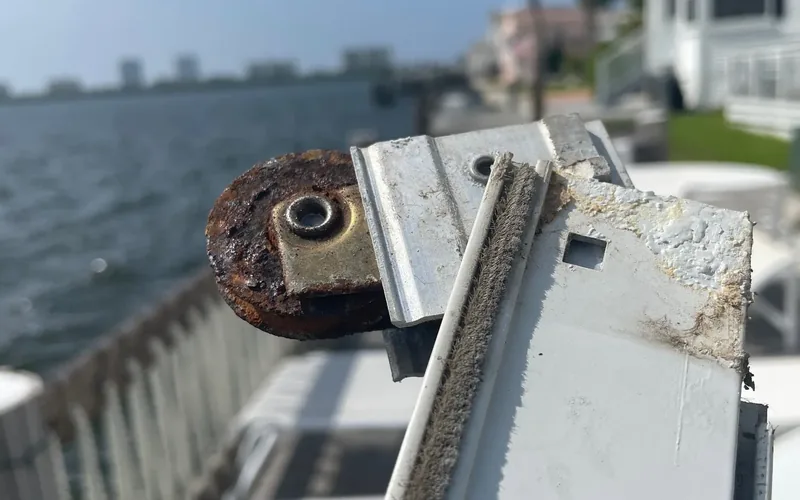
Wheel material, bearing type, single or tandem, and the profile of the wheel's edge. Here's how every roller option compares, and which one belongs under your door.
Read the guide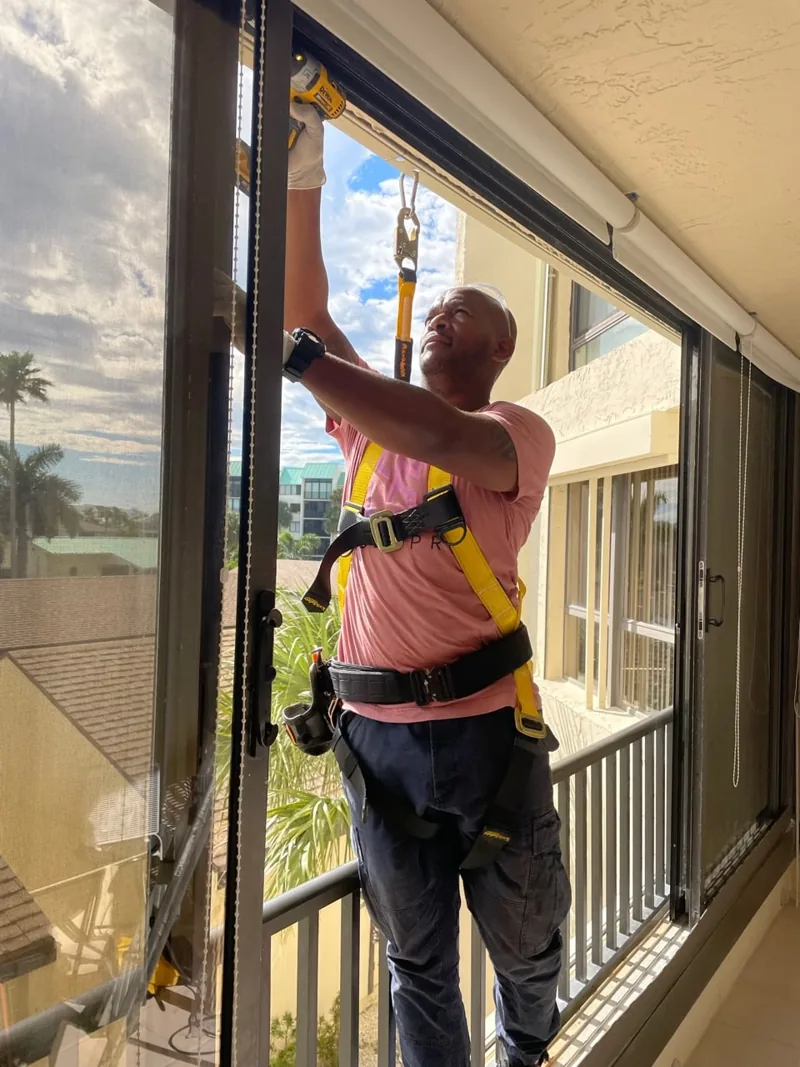
The ocean-facing balcony door takes salt spray the rain never rinses off, wind that grows with every floor, and the weight of impact glass. Here's what that does to the hardware, and how to plan a repair inside a condo building.
Read the guideBefore you call anyone, three checks will tell you which of the usual culprits you are dealing with. They take two minutes and need no tools.
Whatever the checks tell you, do not force a door that has stopped moving. On a seized wheel all that force goes into the rail and the frame corners, and that is how the cheapest repair we do turns into one of the more expensive ones. The symptom-to-cause index covers the less common faults.
Port Salerno is really two housing stocks with two different door problems, and the dividing line is roughly the age of the street.
The village cottages and the older canal streets around the Pocket run sliders from the 1970s and early 80s: aluminum frames, small steel or nylon wheels, and tracks that have been sitting in salt air for four decades. Many of these doors have not glided properly in years, and the household has quietly adapted to heaving them open, which is why the call usually comes when the latch stops catching rather than when the door first got heavy. They are good repair candidates. The frames were built heavier than anything a production builder specifies now, and the corrosion owners assume has ruined the door has almost always attacked the hardware rather than the extrusion.
West and south along Cove Road, and in the newer pockets of construction filling in behind it, the doors are younger, wider and considerably heavier. Post-2005 building in Martin County brings laminated impact glass, and a laminated panel weighs half again to twice what an annealed one does. The rollers underneath were often specified against the older, lighter number. That is why a fifteen-year-old door can be dragging while a forty-year-old one three streets away is not.
Two eras, one repair logic: the glass and the frame are usually fine, the running gear wears out, and the running gear is replaceable inside the door you already own.
Every sliding door company on this coast will tell you salt air is hard on hardware. Here is the part nobody explains, and it changes what you should be asking for.
Salt reaches your track as an aerosol, fine droplets thrown off the water and carried on the breeze. Around the Manatee Pocket there is a twist. A sheltered basin does not get flushed the way open coastline does: on the beach, the wind that carries salt in also carries it away and dries surfaces between deposits. In the Pocket the air is more often still and humid, so what lands tends to stay.
Then chemistry takes over. Salt is hygroscopic and goes into solution above about 75% relative humidity, which here is most of the year, so the deposit in your track is not a dry crust. It is a standing film of brine sitting against metal. Chloride ions in that brine break down the passive oxide layer that normally protects aluminum and stainless steel, and once that layer is breached the attack concentrates into pits rather than spreading evenly. A single pit inside a roller's bearing race is enough on its own: the balls stop running true, corrosion product fills the clearance they need, and the wheel stiffens and then locks. Where a steel axle sits in an aluminum housing there is a galvanic couple as well, and the aluminum corrodes preferentially around the pin.
Three practical conclusions for a Pocket address. Sealed stainless hardware is worth the difference here in a way it is not inland. An occasional fresh-water rinse of the track does more good than any spray lubricant. And a door used daily fares better than one that sits, because motion keeps wiping the race.
Between the seasonal owners and the short-term rentals near the water, a lot of Port Salerno sliders are either used hard by people who did not buy them or not used at all for months. Both are worse for hardware than ordinary family use.
Guests are hard on doors because they do not know the door. They force a panel a resident would have eased, they leave the slider open with the screen shut so wind loads the screen frame, they track dock sand into the rail, and they rarely mention that something felt stiff. By the time a manager notices, a failing wheel has been cutting the rail for weeks.
Empty houses fail differently. A parked panel does not wipe its own bearings, so the brine film sits on one short section of race all summer and corrodes exactly there. That is the classic autumn call: the owner arrives, the door will not move, and forcing it is how a roller job becomes a rail and frame job.
A turnover routine is cheap and takes minutes. Slide every panel fully in both directions and listen. Check that each door latches without anyone lifting the handle. Vacuum the track dry, clear the weep holes, and look at the screen spline for shrinkage before a guest finds it. The rental and Airbnb checklist sets out the full turnover and seasonal calendar, and for a house that sits empty the lock matters as much as the glide: a factory latch is not a lock.
Not everything around the Pocket is a single-family cottage. There are townhomes, villas and waterfront buildings where the slider opens onto a balcony or shared frontage, and in those the first question is not what the repair costs but who is entitled to authorize it.
Florida declarations vary and they are specific to the building. A common pattern treats a patio or balcony slider as a limited common element serving one unit, then splits maintenance: the association takes the frame or the exterior finish and the owner takes the operating hardware, or the reverse. Another common pattern makes the whole door the owner's. Two buildings on the same road are often written differently, and a managing agent will not always remember which is which without pulling the document.
Do this before approving anything. Find the declaration, read the maintenance clause and the limited common element definition, and if the association is responsible, put the fault in writing rather than raising it verbally. Written faults reach agendas; verbal ones tend not to. If the door is yours, book the repair and get on with it, because a dropped panel gets more expensive the longer it grinds.
The detail, including the way declarations usually split the glass from the frame and track, is in who pays for a condo sliding door, owner or association.
A repair-first company that never says replace is not being honest, so here is the short list of what actually rules a Port Salerno door out. It is shorter than most owners expect, and corrosion only decides it in one particular way.
Chalky white surface pitting on an aluminum frame looks alarming and means nothing structurally. What matters is whether the metal has thinned. A bottom rail that gives under thumb pressure, a corner joint that has opened up, or a track rail that a collapsed wheel has cut away rather than merely grooved, all mean the frame no longer holds its geometry, and new hardware in it will not stay adjusted no matter how good the parts are.
The other genuine case is the glass rather than the door. A laminated impact pane delaminating at its edges, or an insulated unit permanently fogged after its seal failed, is a panel issue. We clear and secure broken glass, and when the panel itself is the problem we will tell you rather than sell you rollers that will not solve it.
Everything else here is hardware. Seized wheels, a grooved rail, a latch that misses its keeper, a screen gone brittle in the sun. Those are all replaceable inside the door you already own, and on a heavy waterfront slider the gap between the two paths is substantial. If replacement genuinely is the answer, frame material and hardware matter more than glass specification at an address this close to the water.
Repairs start at $275, and that figure covers parts, labor and a 1 to 3 year warranty on both. It is worth comparing on that basis rather than against a headline call-out price, because the low numbers advertised in this trade generally stop before the hardware that actually fixes the door.
What moves the figure on a Port Salerno job:
You get the number for your door before work starts. The cost guide explains what a complete quote should itemize so two quotes can be compared properly.
Waterfront owners ask two versions of the same question every June: is my slider going to hold, and does repairing it change that.
On rating, the honest answer is that a door's impact rating belongs to the door as a complete assembly, and servicing the running gear does not change what the glass is rated for. What it does change is whether the assembly can perform the way it was designed to. Pressure on a sliding panel is carried by the interlock where the panels meet and by the latch seating into its keeper. A door that has dropped on failed rollers does not close into its interlock squarely and does not latch positively, so the load path the engineer drew is not the load path the door actually has. Bringing the panel back to its correct height is a real part of storm preparation, not a comfort upgrade.
The second issue around the Pocket is water rather than wind. Driven rain puts far more water into a bottom track than ordinary weather does, and the track is designed to shed it through weep holes at the outer edge of the sill. Those holes silt up quietly over a season, and a blocked sill during a heavy band is how water reaches a floor with no glass broken at all. Clear them before the season starts, not during it.
If your opening relies on shutters or removable panels, check the tracks, the anchors and the labeling in May while there is still time to deal with a stripped fastener. The full pre-season and post-storm checklist runs through the sequence.
Honest quotes and repairs usually finished in a single visit — call or send the form.