Roller Replacement
Doors that stick, grind, or jump the track almost always come down to worn rollers. We replace them with heavy-duty stainless rollers so your door glides with one finger again.
About this service
The Sailfish Capital lives on the water — and Stuart's riverfront and ocean-access homes ask more of their sliding doors than almost anywhere else on our route.
Stuart wraps around the confluence of the St. Lucie River and the Indian River Lagoon, which means an unusual share of its homes are waterfront or water-view — and nearly all of them were designed around big glass. Riverfront homes off St. Lucie Boulevard and Palm Beach Road, the estates of Sewall's Point, the condos along East Ocean Boulevard heading out to Stuart Beach: everywhere you look, walls of sliders frame the water.
That's beautiful, and brutal on hardware. Brackish river air corrodes rollers nearly as aggressively as open-ocean spray, and the afternoon east wind pushes salt well inland up the river. Many Stuart homes also carry oversized glass panels — eight- and ten-foot sliders, and multi-panel pocket doors that disappear into the wall. Big panels mean big weight, and when the rollers under a 300-pound panel start to go, the door doesn't just get stiff. It becomes genuinely hard to move, and forcing it bends tracks and cracks frames.
We handle the full range in Stuart: standard patio sliders in the Monterey and Willoughby corridors, heavy multi-panel systems in waterfront estates, and balcony doors in the beach condos. Same approach everywhere — honest inspection, stainless replacement hardware, and an alignment that makes the door glide and lock the way it should.

Doors that stick, grind, or jump the track almost always come down to worn rollers. We replace them with heavy-duty stainless rollers so your door glides with one finger again.
About this serviceWe repair torn, sagging, or sun-damaged screens using your existing frames — for a fraction of the cost of a new screen, so bugs stay outside where they belong.
About this serviceBroken pane, cloudy seal, or stained glass? We replace the pane in your existing frame — safely removing the old glass and fitting new, so the fix is permanent, not a temporary shine.
About this serviceFactory latches are solid for everyday use. We add true deadbolts and secondary locks engineered for sliding doors, for an extra layer of security where it counts.
About this serviceDeep track cleaning, lubrication, alignment, and inspection — the tune-up that keeps small wear from turning into a seized door or a broken roller.
About this serviceA cracked arch is a glass problem, not a window problem. The new piece is cut to the shape of your existing opening — half-round, quarter-round or circular — so the frame and surround stay put.
About this serviceStruck impact glass cracks and stays put — that is the system working. In most cases the sealed unit is replaced inside the original frame, grids and all, instead of the whole window.
About this serviceStuart's defining feature for door work is the sheer size of the glass. Waterfront homes in Sewall's Point, Snug Harbor, Rocky Point and along North River Shores were designed around the view, which in practice means eight- and ten-foot panels and multi-panel pocket systems that disappear into the wall. A pocket door that starts dragging is genuinely urgent — once a panel jams inside the wall cavity, retrieving it is a far bigger job than replacing the rollers would have been a month earlier.
The brackish air is the second factor. The St. Lucie River and the Indian River Lagoon meet here, and the prevailing easterly carries salt well upriver — riverfront homes show corrosion patterns much closer to beachfront than their owners expect. Stainless, sealed hardware is worth specifying anywhere you can smell the water.
The third is age. Many Sewall's Point and Snug Harbor homes have been standing long enough for their openings to settle, and a racked opening throws a door out of square no matter how good its rollers are. Diagnosing which of the two you have — worn hardware or a moved frame — is most of the skill in this work, and they need different fixes.
Not listed? Call 772-722-4036 — this is a sample, not a limit.
Stuart is where we service the most multi-panel and pocket-door systems. These are wonderful when they work and miserable when they don't — a pocket slider with a failing roller can jam inside the wall cavity where you can't reach it. If yours is starting to drag or wobble as it travels, that's the time to call, while the panel can still be pulled and serviced easily. We also see a steady stream of older Sewall's Point and Snug Harbor homes where decades of settling have racked door openings out of square; realignment there matters as much as new rollers.
Yes — Stuart is full of them and they're a regular part of our week. Oversized panels use heavier-duty roller assemblies, and multi-panel and pocket systems need careful sequencing to remove and re-hang correctly. Don't force a dragging pocket door; call us while the panel can still be pulled cleanly.
It does. The St. Lucie River is brackish, and the prevailing east wind carries salt air well up the river — riverfront homes in Stuart and Sewall's Point show corrosion patterns close to what we see at the beach. Stainless replacement rollers are worth it anywhere you can smell the water.
Yes, from Kingswood and Vista Pines up through the oceanfront buildings on Hutchinson Island's south end. We handle association logistics routinely and can coordinate with your property manager where needed.
Now — a squeal is the sound of a dry or failing bearing, and it's the cheap stage of the problem. Caught early, it's often just rollers and a track service. Left for a year, the failing wheel chews the track and the repair grows accordingly.
Downtown Stuart, Sewall's Point, Snug Harbor, Rocky Point, Monterey, Willoughby, Krueger Creek, North River Shores and the East Ocean Boulevard corridor out toward the beaches.
More urgent than most door problems. A pocket panel rides into a cavity inside the wall, so if the rollers fail completely the door can jam where you cannot easily reach it. While it still moves, we can draw the panel out and service it normally. Left too long, it becomes a much larger job.
Yes, including the buildings out toward Stuart Beach and the south end of Hutchinson Island. We handle association logistics as routine and can coordinate directly with property managers for owners who are away.
Usually, yes. We rehang and adjust the panel to the opening as it is now rather than as it was built, which brings the latch back into line with its keeper. Where settling is severe there are limits, and we will say so plainly instead of taking your money for a fix that will not hold.
Repair, almost always, and usually by a wide margin. A replacement buys new glass, a new frame and new hardware, and on most Stuart openings it brings permit work with it. A repair reuses the panel and frame you already own, which are the expensive parts and are usually the parts that are fine. Our repairs start at $275, and that figure includes parts, labor and a written one-to-three-year warranty. The honest exceptions are a frame or sill that has corroded or rotted through, a track extrusion worn past supporting a wheel, or an opening that has moved structurally. We tell you which of those you have before we quote.
Yes. Impact panels are laminated, meaning two lites of glass bonded to a plastic interlayer, and that construction can add half again to the weight of an equivalent single-glazed panel. The hardware underneath is often barely different from what carried the lighter door, which is exactly why heavy Stuart sliders start dragging and missing the latch sooner than owners expect. We fit roller assemblies rated to the panel's real weight rather than the original build spec. What we do not touch is the glazing or the rating itself. If a laminated unit has failed, that is a glass and permit conversation, and your county building department is the authority on it.
Your declaration decides, not a rule of thumb. Florida condominium documents commonly split one sliding door between the association and the unit owner, and the line often falls in a different place for the glass than for the frame, track, rollers and screen. Maintenance responsibility and insurance responsibility are also two separate questions with two different answers. Find the clauses on unit boundaries and limited common elements, or ask your manager for the answer in writing, before you approve anyone's quote. Our condo responsibility guide covers what to look for. This is general information, not legal advice.
At both ends of your stay. A door that sits locked through a Stuart summer corrodes faster than one in daily use, because motion is what wipes the salt film off a bearing and an empty house provides none. A visit before you fly north gets the tracks vacuumed dry, the weep holes proven clear, the rollers serviced and every lock checked. A short check when you land catches a bearing that is stiffening before it becomes a panel that will not move. The first two weeks of the season are when we hear from seasonal owners most, and freeing a door that seized over the summer is a far bigger job than preventing it.
Most are a single visit. Across five years and more than 1,600 doors, 96% of our jobs finish the first time out, and same-day service is available when the schedule allows. A straightforward two-panel roller and track job typically runs an hour or two on site. Wide multi-panel and pocket systems take longer, because the panels have to come out in sequence and go back the same way. What extends a job is almost always something nobody could have known until the panel was out, usually an obsolete roller profile or a rail worn deeply enough to need capping.
Also serving nearby:
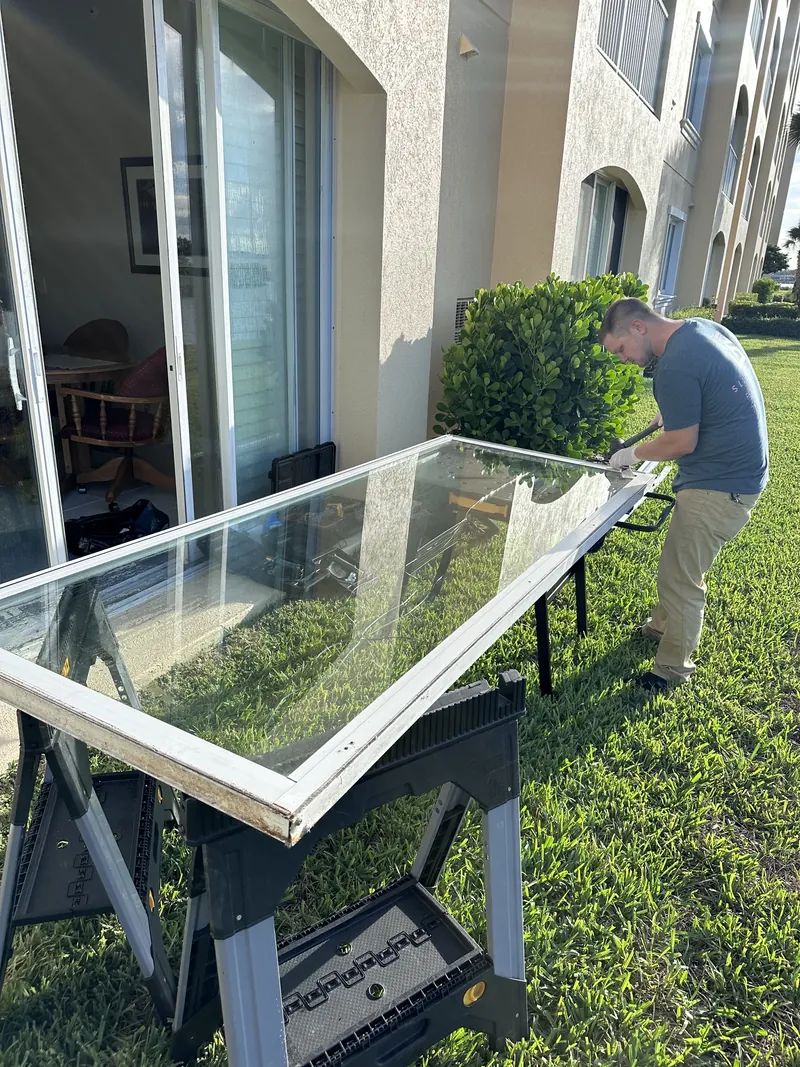
A door off its track is either out of the head channel at the top or off the rail at the bottom, and the two have different causes. Here's how to tell which you have, what's safe to try, and when to leave a heavy panel alone.
Read the guide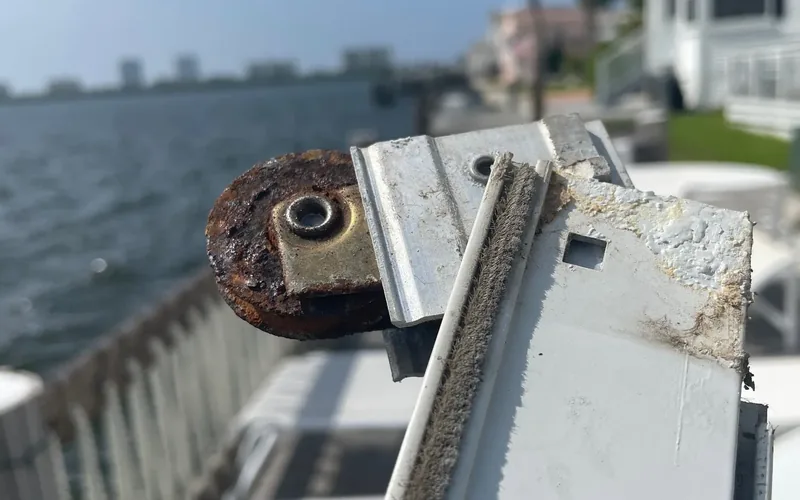
Wheel material, bearing type, single or tandem, and the profile of the wheel's edge. Here's how every roller option compares, and which one belongs under your door.
Read the guide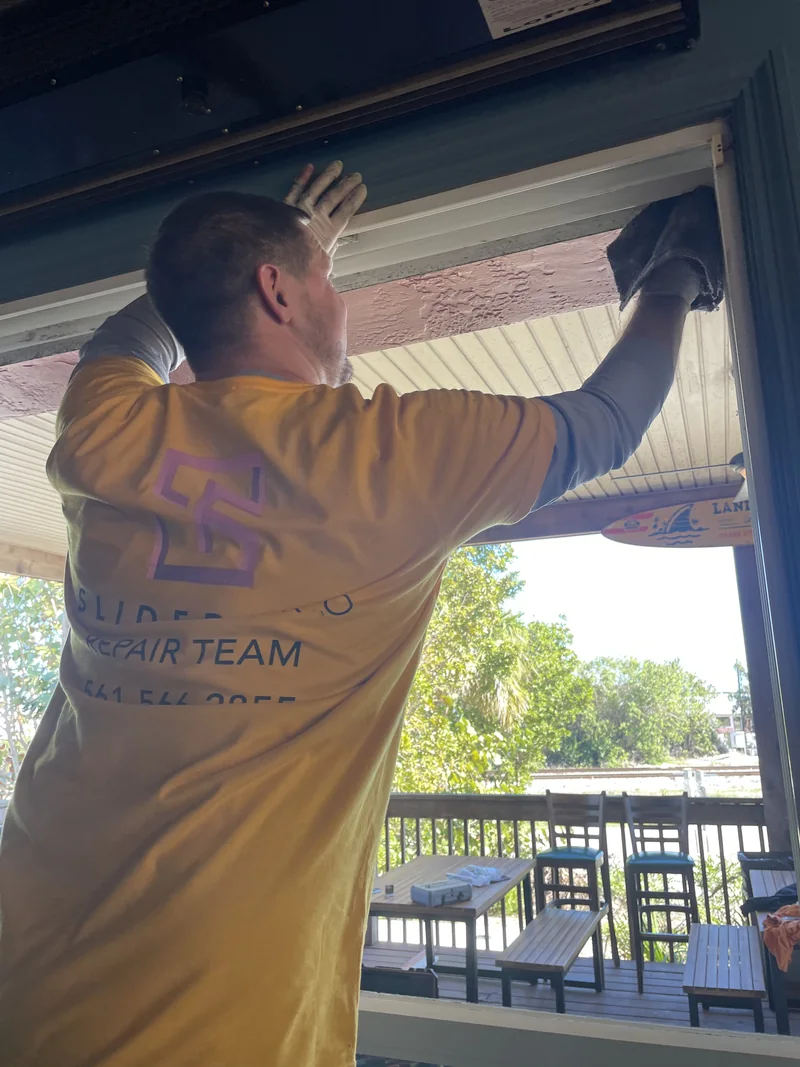
Salt explains most failures on a beachside slider. Inland, the story is sun on the seals, afternoon storm water at the sill, pool splash and older housing stock. Here's how to tell which kind of wear your door has.
Read the guide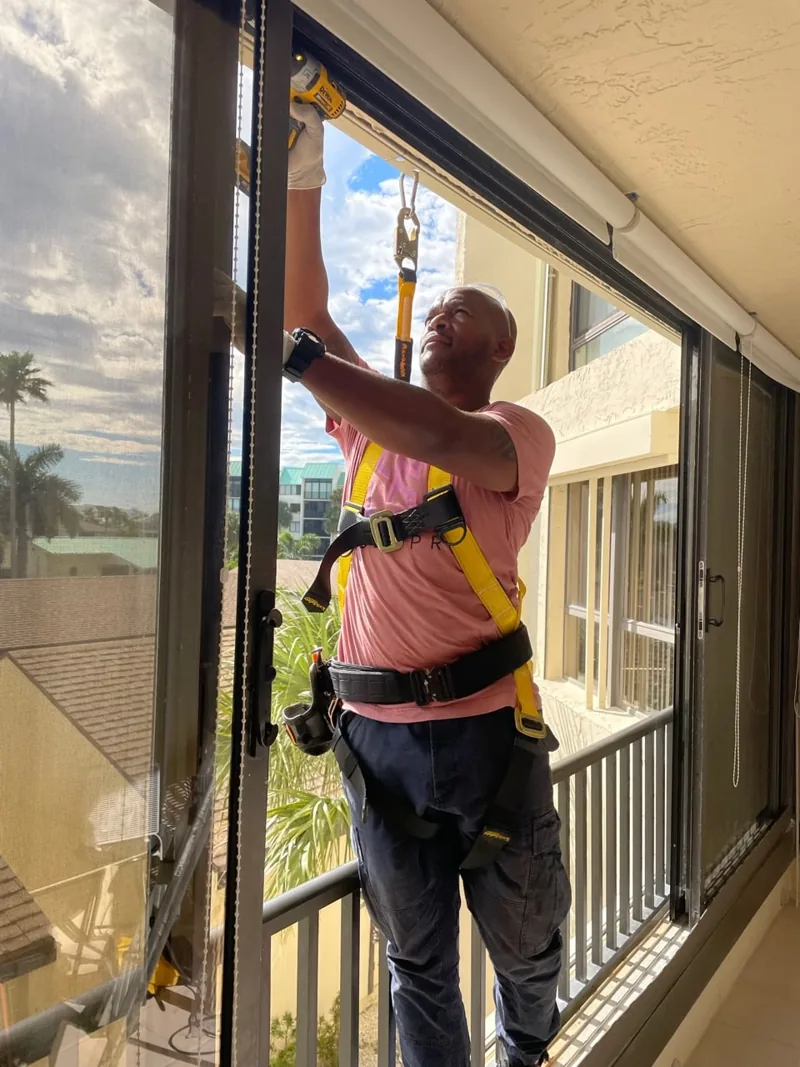
The ocean-facing balcony door takes salt spray the rain never rinses off, wind that grows with every floor, and the weight of impact glass. Here's what that does to the hardware, and how to plan a repair inside a condo building.
Read the guide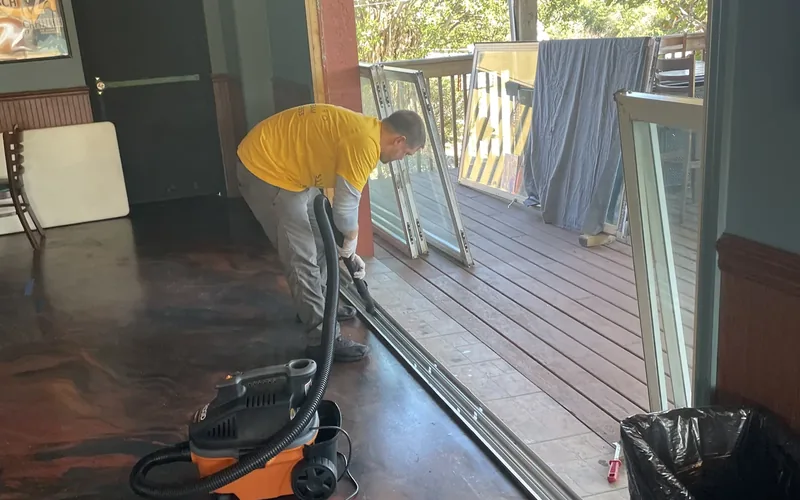
A four-panel stacking slider or a door that pockets into the wall isn't a big version of a patio door. It's a chain of panels that pull each other, a hidden track that collects sand, and a lot more rollers. Here's how they fail and what fixing them involves.
Read the guide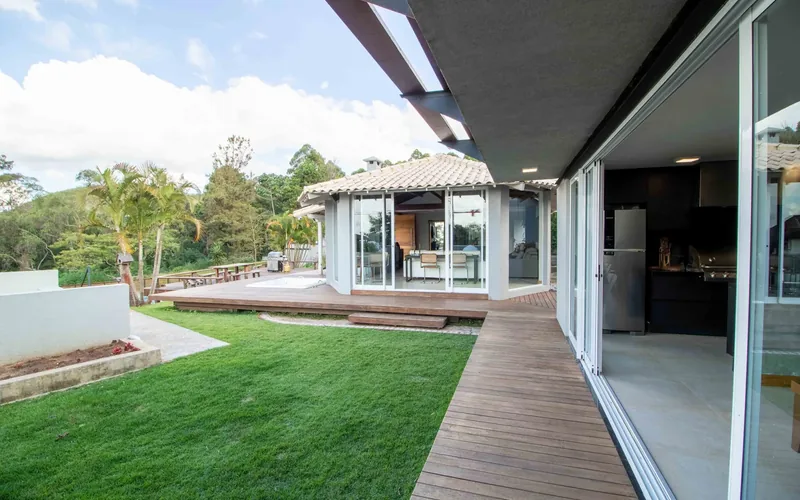
A door that doesn't move corrodes faster than one that does. Here's the week-before-you-leave routine for your sliders, how to handle shutters and storms while you're gone, and the order to check things when you come back.
Read the guideMost Stuart sliders tell you what is wrong before anyone opens a toolbox. Spend a minute with the door and you will usually know which repair you are buying, which makes it much harder for anyone to sell you a replacement you don't need.
Then run the lift test: with the door closed, take the handle and lift straight up. A healthy panel barely moves. If it rises a quarter inch or more, the rollers have worn down and the panel is sitting low in its frame. The seven roller failure signs covers the whole sequence, stage by stage.
Tell us the year the house went up and we can usually predict what we will find behind the glass. Stuart has three broad cohorts, and each one fails in its own way.
1960s to early 1980s: aluminum frames, obsolete roller profiles. The older housing near downtown and along the river was built with heavy extruded aluminum frames and plated steel rollers running in an open housing. Those frames were massively overbuilt and are usually worth keeping. The rollers are decades past their design life, and the profile is often no longer manufactured, so the work is as much about identifying and matching the housing as it is about fitting a wheel. This is the era where a bad diagnosis costs you a whole door, because a company that cannot source the roller will quote you a replacement instead.
1998 to 2006: boom-build tract sliders on builder-grade hardware. The subdivisions that filled out the Kanner Highway and Monterey corridors during the building boom went in with better glass on cheaper hardware. Production builders specify rollers to a price and fit the same one across an entire phase, which is why sticking doors arrive on a street in a cluster rather than one at a time. If two neighbors are complaining about the same symptom, that is a hardware cohort reaching end of life together, not bad luck.
Post-2005: impact units and the weight problem. Laminated impact glass is two lites of glass bonded to a plastic interlayer, and a panel built that way can weigh half again what an equivalent single-glazed panel weighed. Plenty of those doors were hung on hardware barely different from what carried the lighter panel, so the rollers flat-spot early and the track wears fast. We size replacement roller assemblies to the panel's real weight instead of the original build spec.
The pockets closest to the water carry two problems at once, and they need different fixes, which is why diagnosing them apart matters more here than anywhere else on our route.
The first is chemical. Salt does not need surf to reach hardware. The prevailing easterly carries marine aerosol up the St. Lucie River and over the Indian River Lagoon, and it settles on tracks in Rio, North River Shores, the Krueger Creek pockets and the downtown blocks just as it does at the beach. Sodium chloride is hygroscopic: above roughly three-quarters relative humidity it pulls water out of the air and holds a conductive film against metal. That film is an electrolyte, and it does two things at once. It drives pitting through the microscopic pinholes in a plated steel wheel, and it sets up a galvanic couple between that steel and the aluminum track underneath. Aluminum is the anode in that pairing, so it corrodes preferentially and blooms into a white powdery oxide that packs the roller channel and abrades everything running through it. That is why a riverfront door in Stuart shows a beachfront wear pattern its owner was not expecting.
The second is structural. Older homes near downtown and along the river have been standing long enough for their openings to move. A racked opening throws a panel out of square no matter how good the rollers are, and no amount of new hardware brings the latch back to the keeper on its own. We rehang and adjust the panel to the opening as it is today, not as it was framed. Where the movement is severe, we will say so rather than take your money for an adjustment that will not hold.
The golf-corridor homes on Stuart's south side present a different wear profile entirely, and it has almost nothing to do with salt.
Start with duty cycle. A lanai slider on a golf-facing home gets used the way a front door gets used, dozens of cycles a day for most of the year, and those openings are usually the widest in the house. A wide two- or three-panel opening puts more glass weight on the same number of rollers, and every cycle is another pass of the wheel over the same short length of rail. Doors on that pattern reach end of hardware life years before the seldom-used bedroom slider on the same house.
Then irrigation. Course-side and lawn irrigation runs early, and the overspray that lands on a track carries dissolved minerals. The water evaporates and the minerals do not, so a fine scale builds up in the roller channel and along the rail. Add grass clippings, sand from the bunkers and the heavy spring pollen load, and the track becomes an abrasive slurry the moment anyone puts oil on it. Quartz sand is far harder than aluminum, so every pass of a loaded panel laps the wheel and the rail against each other.
The practical answer is boring and effective: vacuum the track dry before anything wet touches it, keep the weep holes proven clear, and use dry silicone or nothing at all. Our ten-minute track routine is the version we would run ourselves, and an annual tune-up catches the rest.
We repair for a living and we still tell people to replace, because pretending every door can be saved is just the mirror image of the companies that pretend none of them can. Here are the cases where replacement honestly wins.
Everything else on a typical Stuart door — rollers, tracks, locks, keepers, screens, weatherstripping — is a repair. The panel, the glass and the frame you already own are almost always the expensive parts, and they are almost always the parts that are fine.
Stuart has a lot of association-governed housing, from the buildings along the East Ocean Boulevard corridor out toward the beach to the villa and townhome communities inland, and the same question comes up every time: whose door is it?
The honest answer is that your declaration decides, not a rule of thumb and not a technician. Florida condominium documents routinely split a single sliding door between the association and the unit owner, and the line frequently falls in a different place for the glass than it does for the frame, the track, the rollers and the screen. Maintenance responsibility and insurance responsibility are two separate questions with two separate answers, and it is common for owners to assume that settling one has settled the other. Our guide to who pays for a condo slider walks through the clauses worth finding — unit boundaries, limited common elements, and the maintenance and insurance provisions — before you approve anybody's quote. That guide is general information, not legal advice.
Two practical points. First, get the answer in writing from your manager or board before the work, not after, because the one thing that reliably costs an owner twice is paying for something the association would have covered. Second, buildings set their own rules for contractor notice, elevator use, working hours and how common areas are protected while a panel is out. Tell us what your building asks for when you book and we will tell you plainly what we can supply, so nothing stalls on the day.
We work on individual units and on whole buildings, and we are used to coordinating directly with property managers for owners who are out of state.
A Stuart door that sits closed from April to November comes back worse than one used every day, and the reason is the opposite of what most owners assume. It is not that the humidity swelled something. Aluminum and glass do not swell.
It is that nothing moved. Motion is what wipes the salt film off a bearing race and off the rail. A door in daily use is constantly disturbing that film, breaking it up and pushing it aside. A locked, still panel lets the film sit in one spot through five humid months, where it stays wet, stays conductive, and works on the same few square millimeters of steel without interruption. Crevice corrosion inside a bearing race is the worst version of this, because that is exactly where the film cannot dry out and exactly where nothing can reach it later. That is why a can of lubricant sprayed on a seized wheel in November buys days rather than years: the corrosion is inside the bearing, and the spray is outside it.
The fix is scheduling, not product. Book at both ends of your stay. Before you fly north: vacuum the tracks dry, prove the weep holes drain, service the rollers and check that every door locks fully. When you arrive back: a short check catches a bearing that is stiffening before it is a panel that will not move. Owners who leave in spring and land in late fall are who we hear from in the first two weeks of every season, and a service visit at the right end of the calendar is a far smaller job than freeing a door that corroded solid over the summer.
Repairs start at $275, and that figure covers parts, labor and a written warranty of one to three years. That is the number worth comparing when you collect quotes, because a lower headline price that excludes parts, excludes labor or carries no warranty is not the same product being sold.
What moves it on a Stuart door:
You get the number before we start, not on the invoice afterward. Our Florida repair cost guide explains what a complete estimate should contain and the questions worth asking any company that quotes you.
Coastal Martin County sits inside Florida's wind-borne debris region, which is why so much of what has been installed in Stuart since the mid-2000s is impact rated. That has consequences for hardware long before it has consequences in a storm.
The weight is the first one. A laminated panel is heavier than the single-glazed panel it replaced, sometimes by half again, and rollers, tracks and keepers all feel that every day of the year. Heavier panels flat-spot bearings sooner, wear rails faster and drop out of latch alignment earlier. If your impact door has started dragging or missing the latch, that is ordinary hardware wear arriving on an accelerated schedule, not a fault with the glass.
The second is that a door is only as good as its ability to close and lock completely. Storm water gets in through a track long before storm wind gets in through glass, and a panel sitting low in its frame does not compress its weatherstripping evenly or seat its lock fully. Before each season, check three things by hand: that the door closes and locks every time without being lifted or shoved, that the weep holes actually drain when you pour water into the track, and that the seals contact along their whole length. Our hurricane prep checklist runs through the rest.
On the questions we are not the authority for — what rating your specific opening has to meet, what needs a permit, and what may or may not be swapped on a rated assembly — ask the Martin County building department directly. We repair the hardware and the alignment, and we will tell you plainly when a question belongs to them instead of us.
Honest quotes and repairs usually finished in a single visit — call or send the form.